
Last updated November 22, 2026
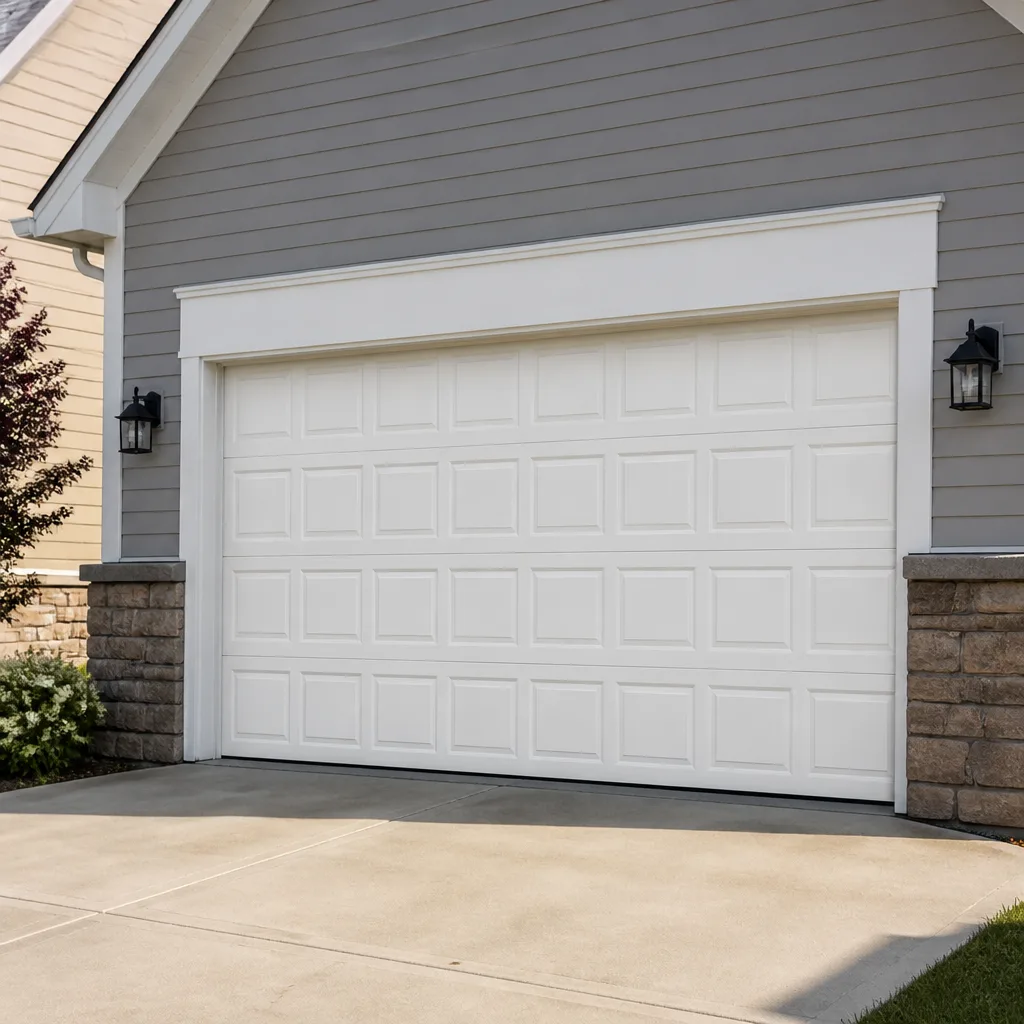 Raised-panel steel
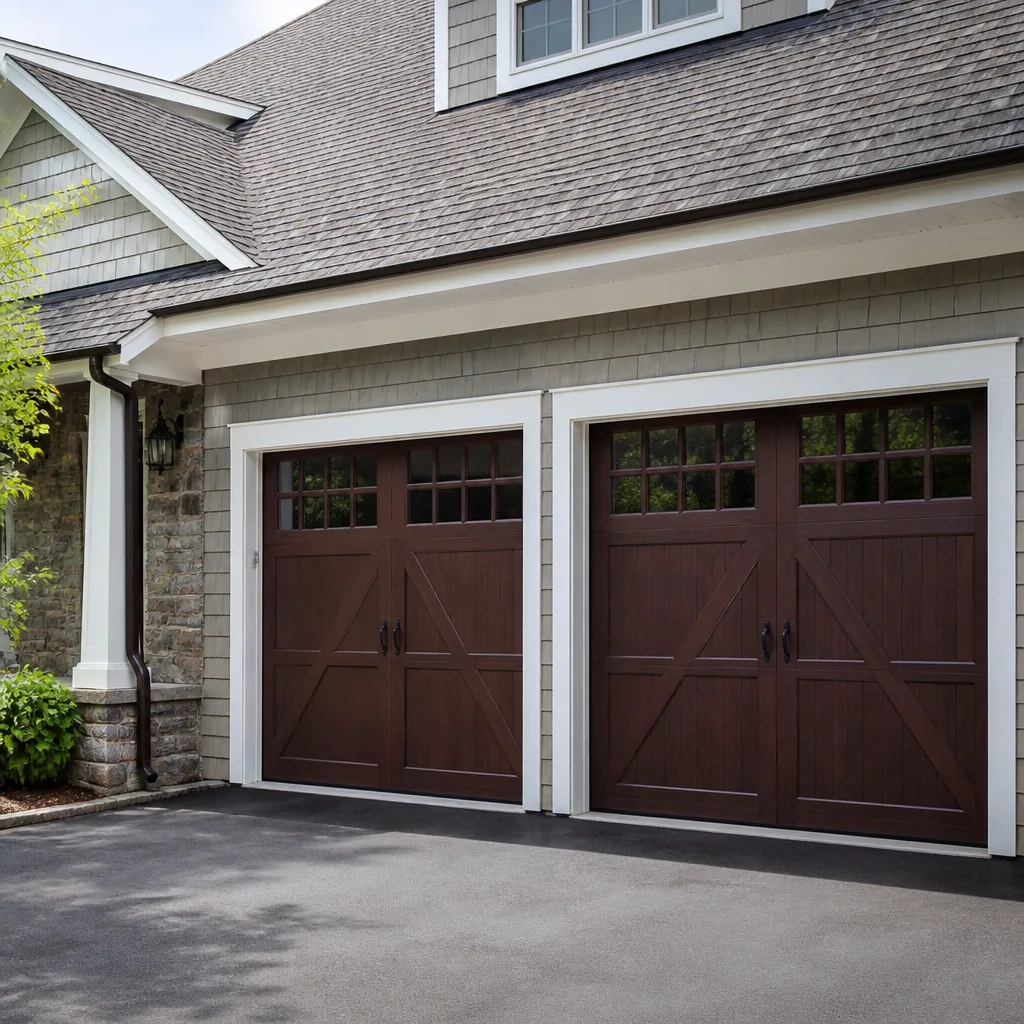 Carriage house
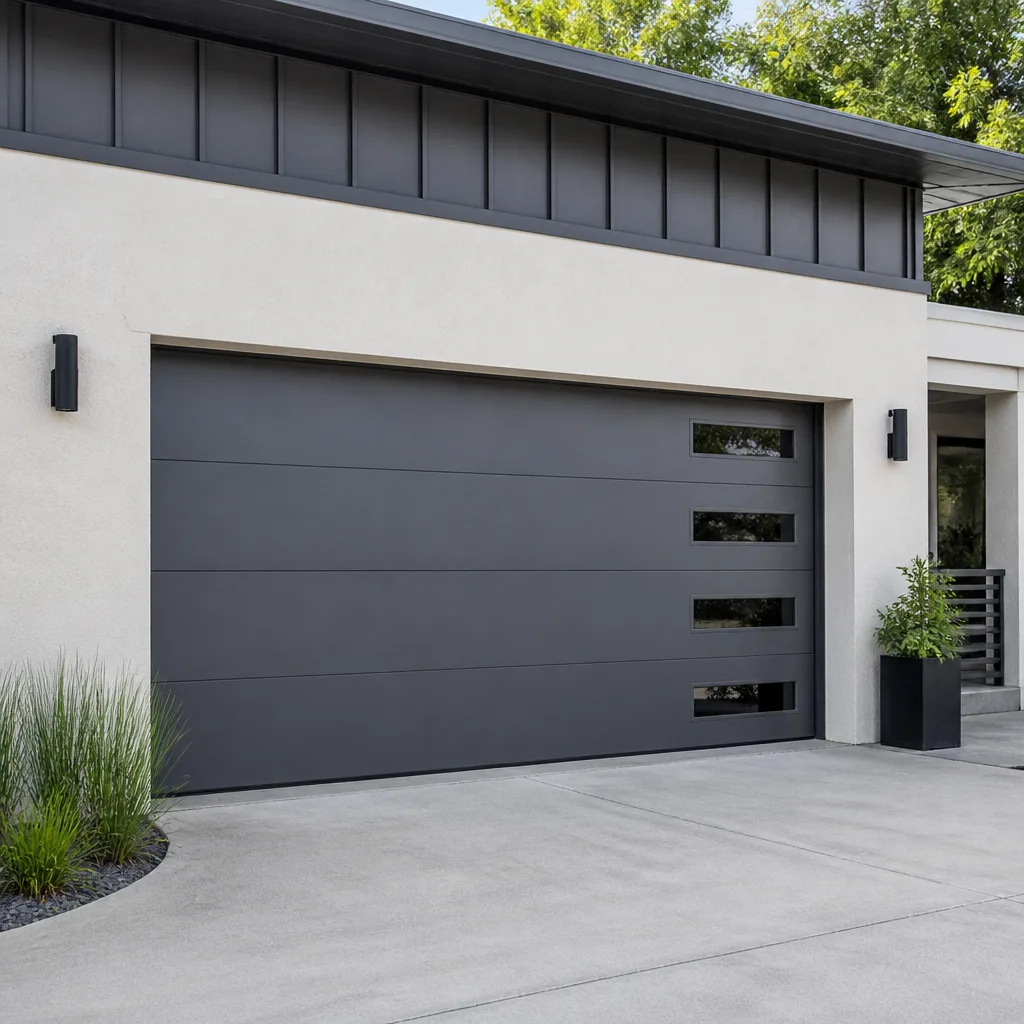 Modern flush
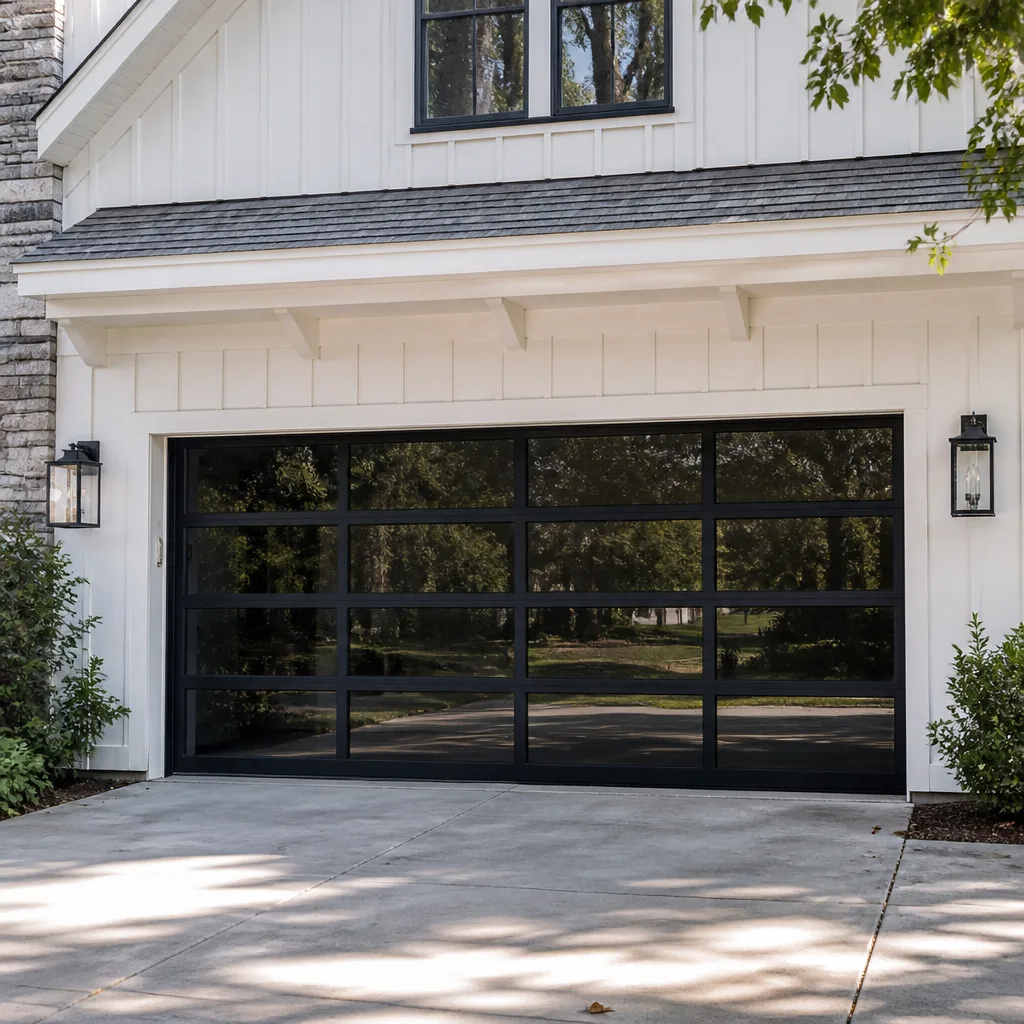 Full-view glass
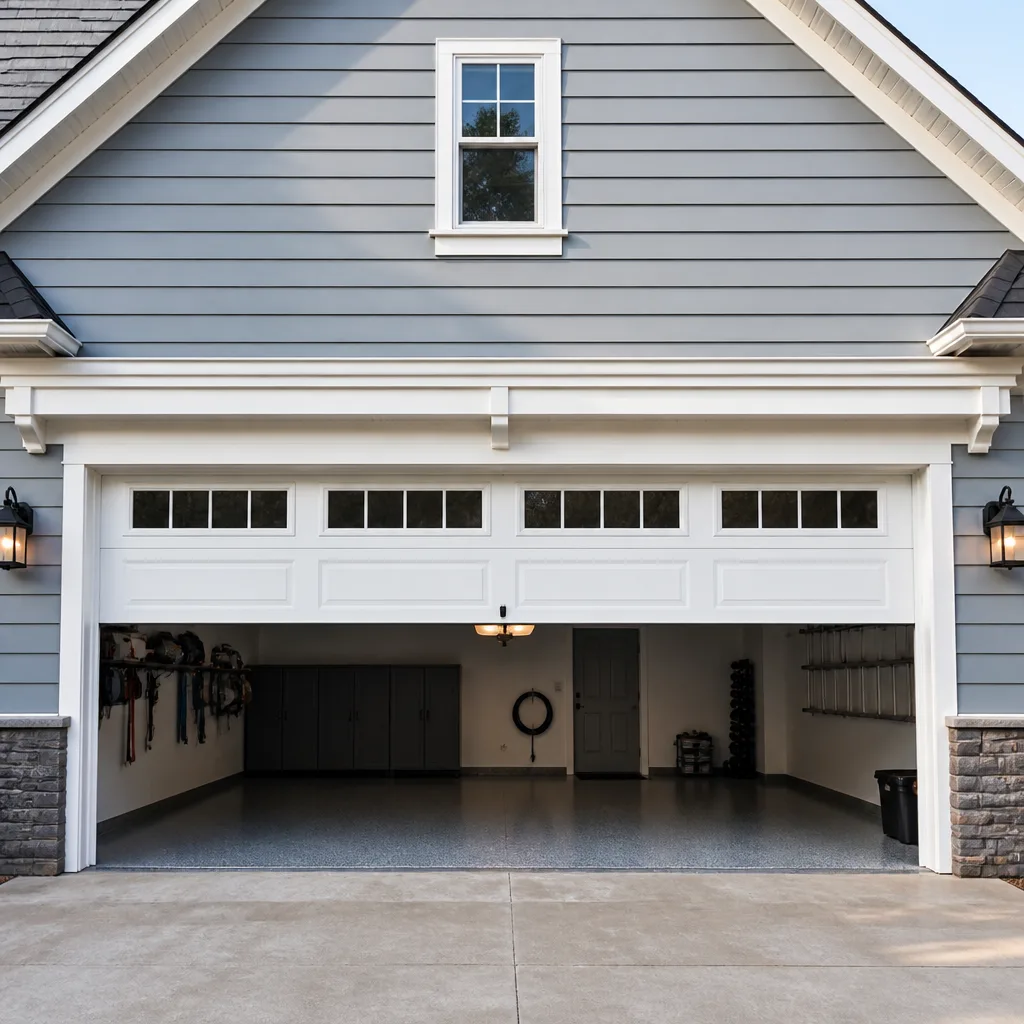 LiftMaster openers
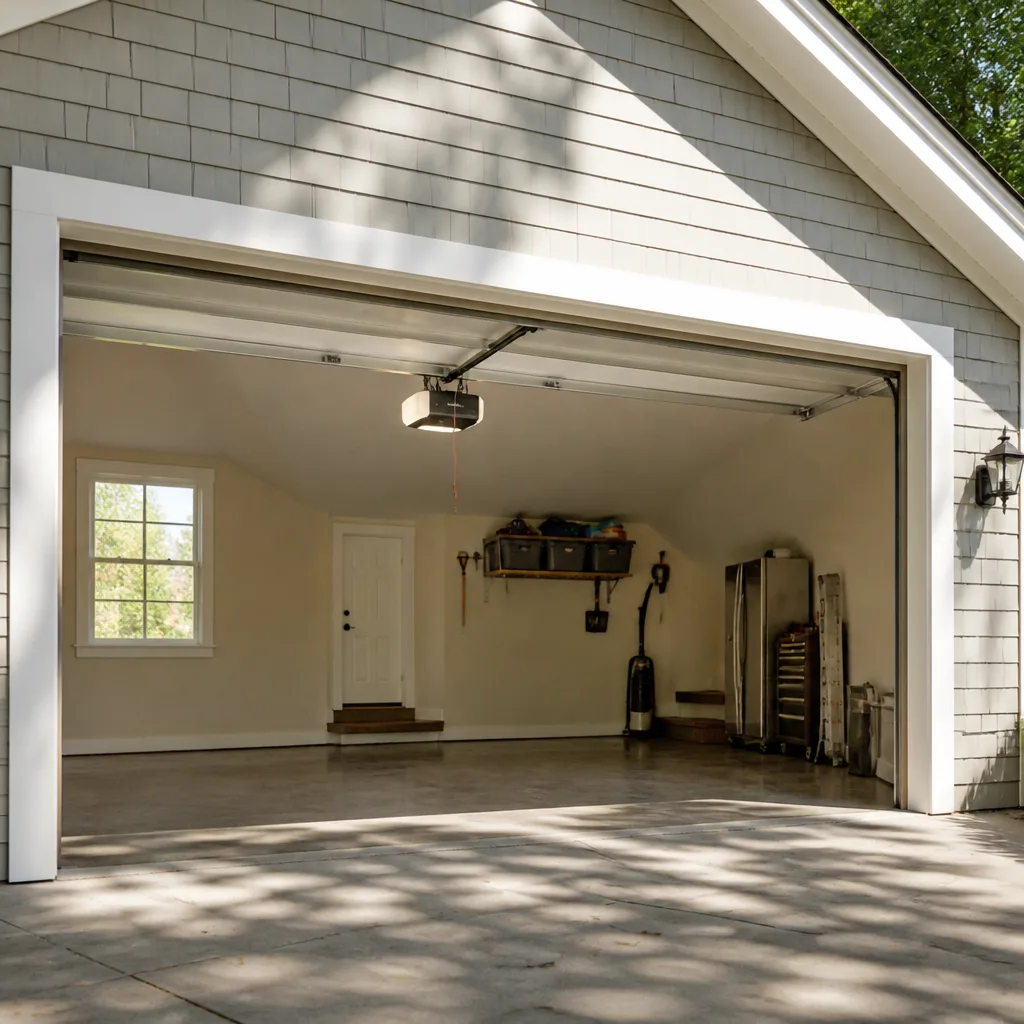 Chamberlain openers
Full 25-point door and opener safety check with every visit - springs, cables, rollers, tracks, and your LiftMaster or Chamberlain opener included
You get a price before we start. It does not change when the pro arrives.
Get your free estimateThe Complete Guide to Garage Doors in Homestead
Most garage door guides are written for climates where the biggest threat is a cold snap. In Homestead, your door faces 160 mph wind-load requirements, year-round salt air, and humidity that never really breaks – conditions that eliminate half the options you’d see on a national retailer’s website. A door that performs beautifully in Ohio can fail here within a few seasons, and a door that’s legally installable in another Florida county may not be approved in Miami-Dade. This guide treats those local conditions as the organizing principle: how to choose a material, how to read a wind-load rating, what insulation really does here, and which brands you can actually get parts for. By the end you’ll know what matters for a door in Homestead and what’s just marketing.
Quick Answer
The best garage door for a Homestead home is a Miami-Dade NOA-approved model with a wind-load rating that meets or exceeds the county’s requirements, built from steel, aluminum, or fiberglass rather than wood, with hardware selected for humidity and salt exposure. Insulation matters in Homestead for heat rejection, not heat retention, so a higher R-value helps keep the garage cooler in summer rather than warmer in winter. Brand choice should favor openers and doors with local parts availability – LiftMaster, Chamberlain, Genie, Clopay, Amarr, Wayne Dalton, Craftsman, and Raynor are the systems we handle most often.
Styles & brands we work with
- Raised-panel steel
- Carriage house
- Modern flush
- Full-view glass
- LiftMaster openers
- Chamberlain openers
Table of Contents
- Why Miami-Dade NOA Approval Rules Everything Here
- How to Read a Wind-Load Rating (and What “Hurricane Rated” Really Means)
- Material Comparison for Homestead’s Humidity and Salt Air
- Insulation R-Value: Heat Rejection, Not Heat Retention
- Brand Availability and What It Means for Repairs
- Choosing an Opener for a Heavy, Wind-Rated Door
- A Maintenance Routine That Fits the Homestead Climate
- Repair or Replace? A Decision Guide
Why Miami-Dade NOA Approval Rules Everything Here
Any garage door installed on a home in Homestead generally needs a Notice of Acceptance, or NOA, from Miami-Dade County before it can be permitted and installed. The NOA is the county’s product-approval document: it confirms that a specific door model, tested at a specific design pressure, is rated for wind loads in this part of Florida. Without one, your permit won’t clear, and an unpermitted door can create real trouble at resale or after storm damage. Homestead sits inside Miami-Dade County, so the same NOA framework that governs Miami also governs installations here.
What this means in practice is that a garage door isn’t a free choice. Before you fall in love with a model you saw on a national retailer’s site, check whether that exact model – not just the brand, not just the line – has a current NOA on file with Miami-Dade County. The approval is tied to the model number, the panel configuration, and often the glazing or window options. A similar-looking door from the same manufacturer may not be approved.
What to ask before you sign
- Ask the installer for the NOA number for your specific door model and configuration.
- Confirm the NOA is still current – Miami-Dade approvals have expiration dates.
- Verify that the door’s design pressure meets or exceeds what your home’s permit requires.
- Ask the installer whether they will pull the permit and handle inspection scheduling.
- Ask what reinforcement hardware the approved system requires, and confirm it’s included.
If you’re replacing a door on an existing Homestead home, the requirements can differ from new construction. Ask your city’s building department how the permit process applies to your specific address. Our team can help you read an NOA and translate it, and we’ve handled enough Miami-Dade installs to know which models actually clear without back-and-forth. If you’re evaluating a new door, our garage door installation process walks through NOA verification before any order is placed.
How to Read a Wind-Load Rating (and What “Hurricane Rated” Really Means)
“Hurricane rated” is a marketing phrase, not a technical one. A useful wind-load rating is expressed as a design pressure – a positive and negative pounds-per-square-foot number – that has been verified by testing and listed on the door’s NOA. In Homestead, you’ll want the design pressure to match or exceed what your area requires; Miami-Dade’s requirements are among the stricter in the country, and the county engineering department is the authority for the number you actually need.
Wind-load ratings break down into a few components worth understanding:
- Positive design pressure – the door’s ability to resist wind pushing inward. This is the number most homeowners know.
- Negative design pressure – the door’s ability to resist suction pulling outward. This is often the limiting factor and is easy to overlook.
- Reinforcement hardware – struts, jamb brackets, and track anchors that make the door’s rated performance possible. A rated door without its rated hardware isn’t rated.
- Wheel and hinge upgrades – heavier components rated for the loads the door will see in a storm.
Here’s the trap: many doors advertised as hurricane rated meet some rating, but not necessarily the one your permit requires in Homestead. A “hurricane rated” door that falls short of the specific design pressure on your NOA is a door that won’t pass inspection. When you compare quotes, the design pressure should be printed on paper, not described verbally.
The second trap is hardware. A rated door with standard hardware is no longer rated. If any part of the reinforcement system – struts, brackets, tracks – gets swapped during a repair or opener replacement, the door’s performance drops. When we touch a rated door in Homestead, we try to keep the rated hardware intact and match replacements to spec. Our garage door repair service usually starts with a hardware audit on any rated door.
Material Comparison for Homestead’s Humidity and Salt Air
Material choice in Homestead is a humidity and salt-air decision as much as a price decision. The ranking below weighs corrosion resistance, humidity performance, weight, and long-term maintenance – not just upfront cost.
Steel (insulated or non-insulated)
Steel is the most common garage door material in Homestead homes and holds up well when the finish stays intact. The failure mode is corrosion: scratches, chips, and dings expose bare metal to humid air and salt, and rust starts small then spreads along panel seams. Good news: steel is easy to repaint, and many steel doors are available in fully rated, NOA-approved configurations from Clopay, Amarr, and Wayne Dalton. Insulated steel doors are the sweet spot for most homeowners here.
Aluminum
Aluminum resists rust better than steel and is lighter, which helps with opener wear on larger doors. It dents more easily, and lightweight aluminum doors can feel flimsier. Full-view and modern aluminum doors are popular in newer Homestead construction, and many rated aluminum options exist. Check the NOA on the specific model – some aluminum doors are approved only in reinforced configurations.
Fiberglass
Fiberglass is corrosion-resistant and can be a good fit for salty, humid environments. The downside is impact resistance: fiberglass cracks rather than dents, and repairs are harder. Rated fiberglass doors are available but less common. For a homeowner prioritizing corrosion resistance over storm-impact behavior, fiberglass is worth exploring – just confirm the NOA first.
Wood and wood composite
Real wood and wood-composite doors are the hardest to live with in Homestead’s humidity. Wood swells, warps, and grows mold; paint peels faster, and the finish needs attention regularly. Wood-composite doors do better than solid wood but still require more care than steel or aluminum. Most Homestead homeowners who want a wood look are better served by a composite-steel door with a wood-grain finish. If you have a wood door and it’s showing moisture damage, that’s a case where the repair-vs-replace math often tips toward replace.
A simple way to think about it: in Homestead, the goal is a door that shrugs off humidity and salt without finish work every few years. Steel and aluminum get you that most reliably. Fiberglass works with caveats. Wood doesn’t, unless you’re prepared for maintenance.
Insulation R-Value: Heat Rejection, Not Heat Retention
In cold climates, garage door insulation is about keeping heat in. In Homestead, it’s about keeping heat out. An insulated door slows heat transfer from the garage’s sunny exterior face into the garage air, and if the garage is attached to the house, that matters for the rooms behind it. An uninsulated steel door in direct South Florida sun can get hot enough to make an attached garage uncomfortable, and that heat pushes through the shared wall into living space.
Here’s what the R-value actually tells you, and what it doesn’t:
- R-value measures resistance to heat flow. Higher R-value means slower heat transfer, which is what you want in Homestead summers.
- The value is measured at the door’s thickest point, not the whole door. Seams, glazing, and frame edges are colder or hotter than the center panel.
- Air sealing matters as much as the number. An insulated door with a leaky perimeter loses much of its advantage.
- Insulated doors are quieter and heavier. Quieter is a plus; heavier means your opener needs the right specs for the load.
For most Homestead homes, an insulated door in the middle of the R-value range is a reasonable balance of performance and cost. The bigger wins often come from a door with good perimeter weatherstripping and a properly tensioned closer. If you’re replacing an uninsulated door on a west- or south-facing wall, the comfort difference is noticeable. If your garage is detached and unconditioned, the R-value argument is weaker, though the noise and no-dent benefits still matter.
For a homeowner weighing new-door cost against the comfort gain, insulated steel is usually the answer. If you’re evaluating specific models, our garage door installation page covers how we score doors for this climate. And if your current opener is already straining, that’s a sign to have it looked at before upgrading the door; our garage door opener repair service can tell you quickly whether the opener is up to a heavier panel.
Brand Availability and What It Means for Repairs
The brand on your garage door and opener matters far less than whether parts are actually reachable when something breaks. In Homestead, some brands have strong local distributor support and quick part availability; others require ordering that can stretch the repair into weeks. The brands we handle most often – LiftMaster, Chamberlain, Genie, Clopay, Amarr, Wayne Dalton, Craftsman, and Raynor – are the ones we can usually source parts for without delays. That’s not a sales pitch, it’s a practical observation from doing repairs here.
Brand-by-brand notes for Homestead
- LiftMaster and Chamberlain – huge installed base, strong part availability, and their openers are known to work well with the heavier, insulated doors common in rated installations.
- Genie – common on older Homestead homes; basic parts easy to source, but some vintage models need careful matching.
- Clopay – a broad line of steel doors and a deep catalog of Miami-Dade-approved models. Sourcing is usually straightforward.
- Amarr – solid line of rated steel doors; some panel options take longer to source than Clopay.
- Wayne Dalton – good availability on common models and openers; less common configurations need patience.
- Craftsman – very common as an opener brand; some older models have discontinued parts, so diagnosis comes first.
- Raynor – less common in Homestead homes, but parts are reachable with a little lead time.
What a homeowner should take from this: if your door is a common model from a brand with a local distributor, a repair is usually fast. If your door is a discontinued model or a brand without local parts support, the repair may involve ordering, and repair-vs-replace math tips faster. Before you call, know the brand and model – it’s stamped inside the operator housing or on a label on the door panel. Our technicians have up to 9 years of experience with these eight brands, and a call usually gets you a diagnosis without needing to shop around.
Choosing an Opener for a Heavy, Wind-Rated Door
An opener on a rated garage door in Homestead has to lift a heavier, stiffer assembly than a standard door, and it has to do so reliably when a hurricane-rated door’s reinforcement hardware is installed. The most common upgrade mistake we see is a homeowner installing a light-duty opener on a newly rated door and getting a slow, strained lift. The opener needs to match the door’s weight and the reinforcement spec.
What matters when you specify an opener
- Horsepower and lift capacity rated for the door’s weight, not just the door’s size.
- Battery backup, which many homeowners choose so the door still opens when the power is out.
- Safety sensors with strong alignment, since Homestead’s humidity can fog or obstruct sensor lenses.
- Wi-Fi and app control, a practical convenience for monitoring a door during storm season.
- Compatibility with your door’s reinforcement hardware, especially on rated doors.
If you already have an opener that struggles, get it looked at before it fails. A strained opener tends to give warning signs: the door reverses before closing, the motor runs but the door barely moves, the opener strains audibly at the start of a cycle. Our garage door opener repair handles all eight brands, so the fix isn’t a search for a specialist who works with your specific unit.
One more opener note: in Homestead, many homeowners have their opener wired into a home generator circuit. If you’re adding a generator, tell the electrician the opener is on that circuit so it stays in the protected circuit group.
A Maintenance Routine That Fits the Homestead Climate
Humidity and salt air accelerate wear on the parts you can’t see: springs, cables, hinges, and rollers. A maintenance routine tuned for Homestead should check those components more often than a cold-climate homeowner would. A good rule of thumb is a visual check monthly and a mechanical check twice a year.
What to check monthly (no tools required)
- Listen for new noises on open and close – grinding, squealing, or popping are all worth a look.
- Watch the door travel: it should move evenly and reverse cleanly when the safety sensor is blocked.
- Look for rust spots on hinges, rollers, and panel seams.
- Check the weatherstrip across the bottom of the door for gaps or cracking.
- Confirm the safety sensors are aligned and the indicator lights are steady.
What to check twice a year
- Inspect springs and cables for wear, rust, or fraying – do this visually only. High-tension springs and cables are dangerous and should never be adjusted or touched.
- Look at the door balance: with the opener disengaged, the door should hold roughly at mid-height rather than dropping hard or rising.
- Check the reinforcement hardware on a rated door – struts and brackets should be tight and intact.
- Test the opener’s auto-reverse function by placing an object in the door’s path.
The key safety point: springs and cables are under extreme tension, and adjusting or replacing them is one of the most dangerous home jobs. If you see a broken spring or a frayed cable, call a trained professional. garage door spring repair is one of our core services because so many homeowners are rightly uncomfortable touching that part of the system. Our technicians handle springs as part of routine repairs, and we take the safety side seriously – never work on a spring yourself.
Salt air is the other reason to keep a maintenance eye on the door. If you can see rust starting on the bottom panel or the hinges, clean it off early and touch up the paint. Once rust gets into a panel seam it’s much harder to stop.
Repair or Replace? A Decision Guide
The repair-or-replace question is the one we get asked most, and the answer is rarely as simple as age alone. A 12-year-old door that’s been maintained might have more useful life than a 4-year-old door that’s rusted out. Use the following decision framework.
- Cost of the repair vs cost of a new door. If a repair approaches half the cost of a new door, replacement deserves a hard look.
- Has the door ever been NOA-approved for its current configuration? If the reinforcement hardware has been removed or replaced over time, restoring the rated configuration may be more expensive than a new rated door.
- What’s the structural condition? Rust, warped panels, failing hinges, and a loose track set are signs the door is near the end of its life.
- Is the model discontinued? A discontinued model with unreachable parts often makes repair impractical, especially if the panel needs replacing.
- Are you planning to sell? A rated, insulated, well-maintained door is a resale point in Homestead. A door in visible disrepair can be a buyer’s concern.
- Is the opener original and worn? If you’re replacing both the door and the opener, the combined project is often more cost-effective than staged repairs.
In Homestead specifically, the two conditions that push toward replacement rather than repair are corrosion that’s reached the panel seams and a door that’s no longer in a rated configuration. Both are hard to fix economically, and both affect the door’s performance in a storm. When a repair can restore safe, rated function, we’ll usually recommend repair and be specific about the reason. When the math tips toward replacement, we’ll say so and give you the numbers behind the call. Our team at Homestead Garage Door Repair Pros handles both sides of that decision, so you’re not being pushed toward the more expensive choice.
Common Mistakes to Avoid
- Buying a “hurricane rated” door without checking the NOA. The phrase alone means nothing. Get the NOA number for the exact model and confirm it’s current and that its design pressure meets your permit’s requirement.
- Replacing a rated door’s hardware with standard parts. Swapping a strut, bracket, or track for a non-rated equivalent quietly turns a rated door into an unrated one – and may fail inspection.
- Choosing wood or wood composite in Homestead. The humidity and salt air will shorten the door’s life and force more maintenance than most homeowners expect. Steel, aluminum, or fiberglass are better suited to this climate.
- Installing a light-duty opener on a heavy insulated or rated door. The opener needs to match the door’s weight. A mismatched opener strains, wears out sooner, and can leave the door half-open in a power failure.
- Skipping the perimeter weatherstripping. Even a well-insulated door loses much of its benefit when the perimeter leaks. Weatherstrip and bottom seal are worth inspecting and replacing periodically.
- Touching a spring or cable yourself. These components are under extreme tension. A broken spring is a repair for a trained professional, not a weekend project.
- Ignoring small rust spots. In Homestead’s humid air, small rust spots become panel-seam rust faster than most people expect. Clean and repaint early.
- Assuming any brand is quick to repair. Parts availability in this market varies widely by brand and model. Common models from well-supported brands repair fast; discontinued models can mean weeks of waiting.
See the difference
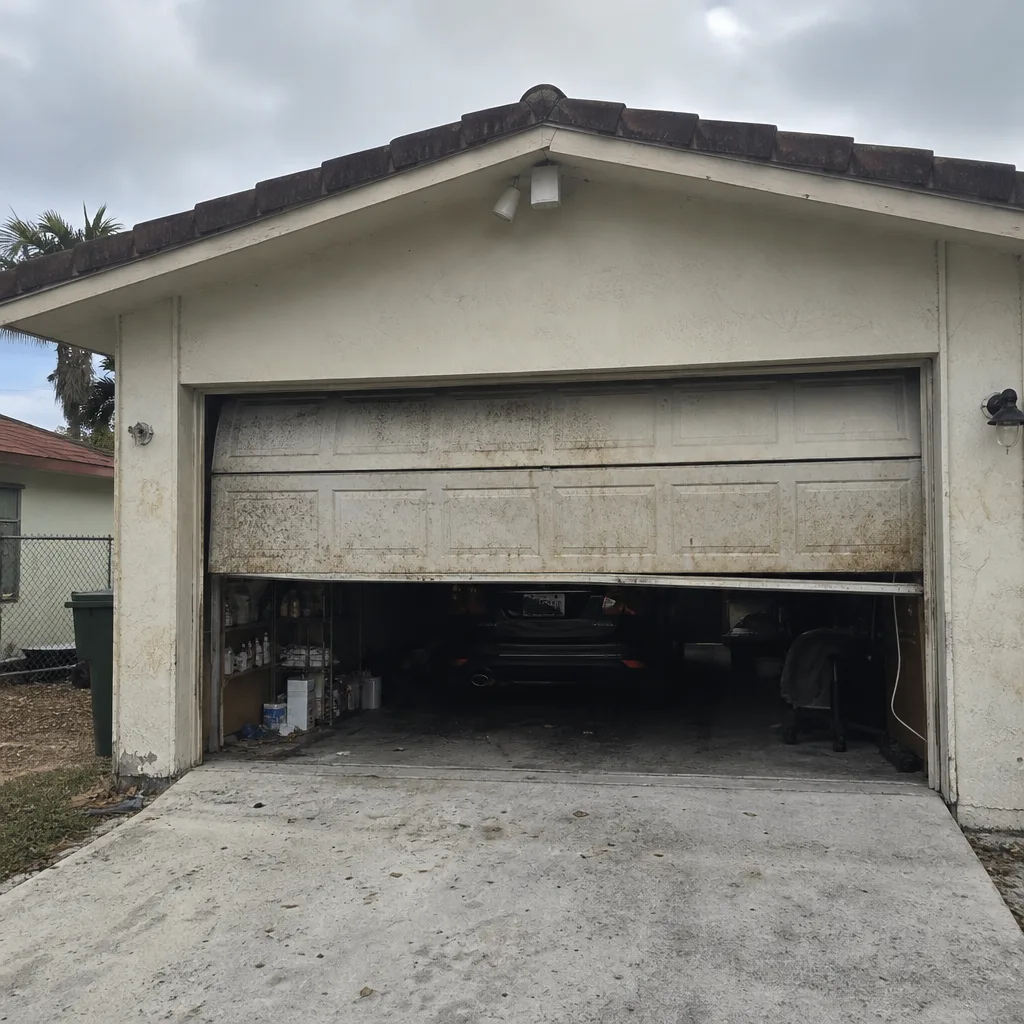 Before
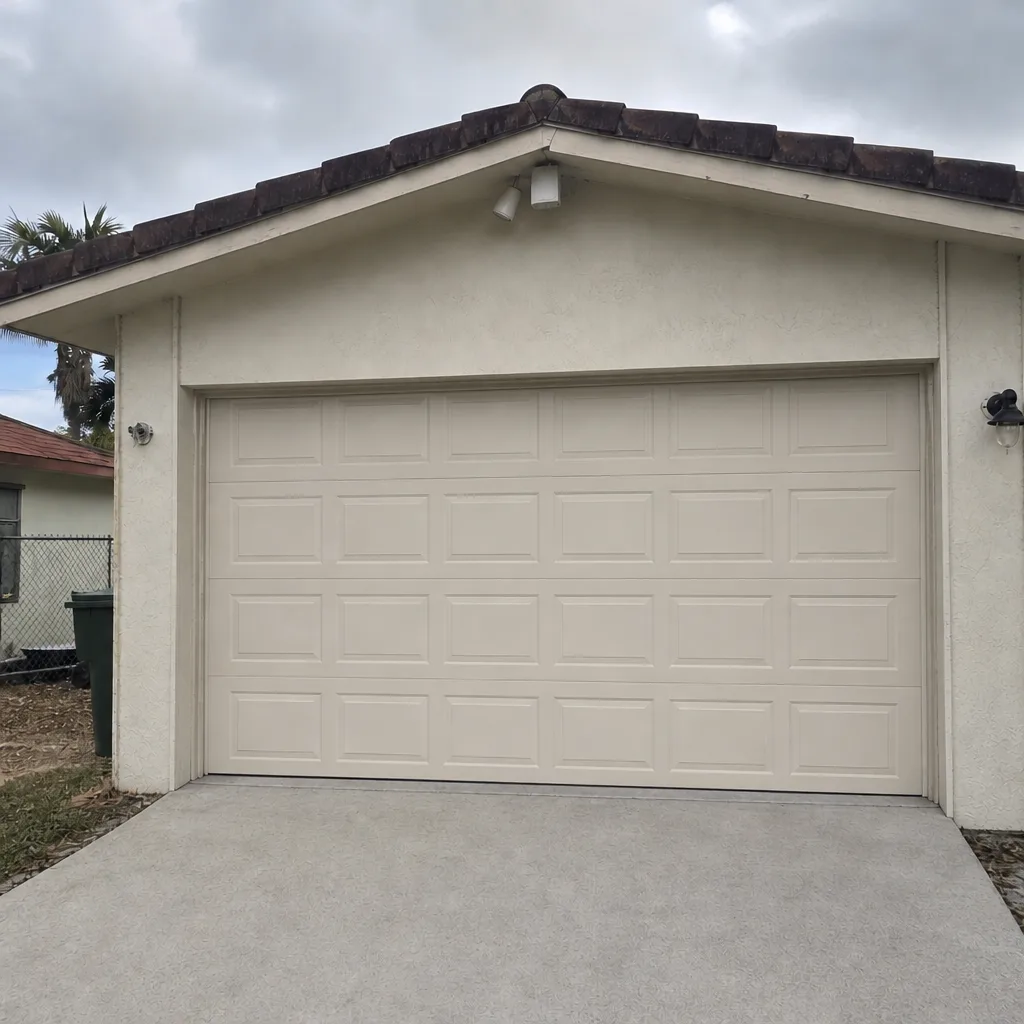 After
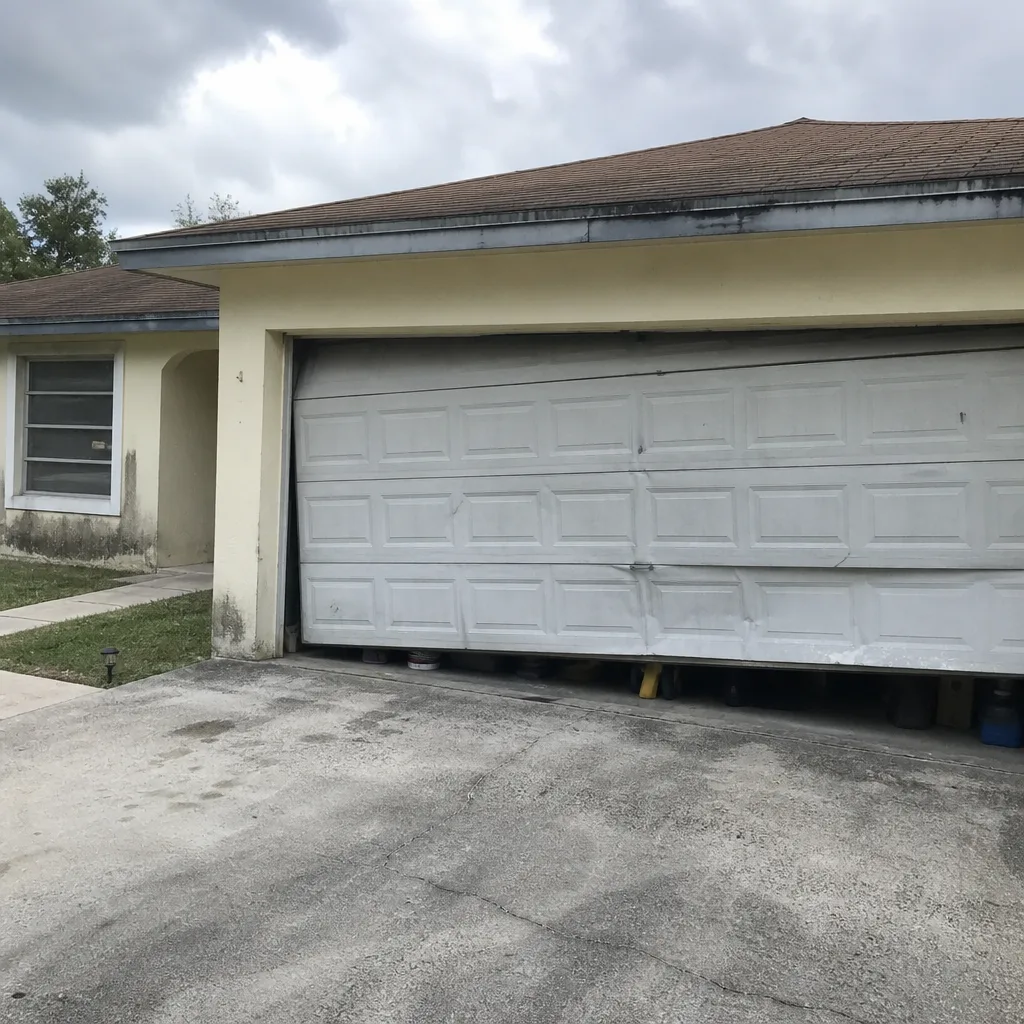 Before
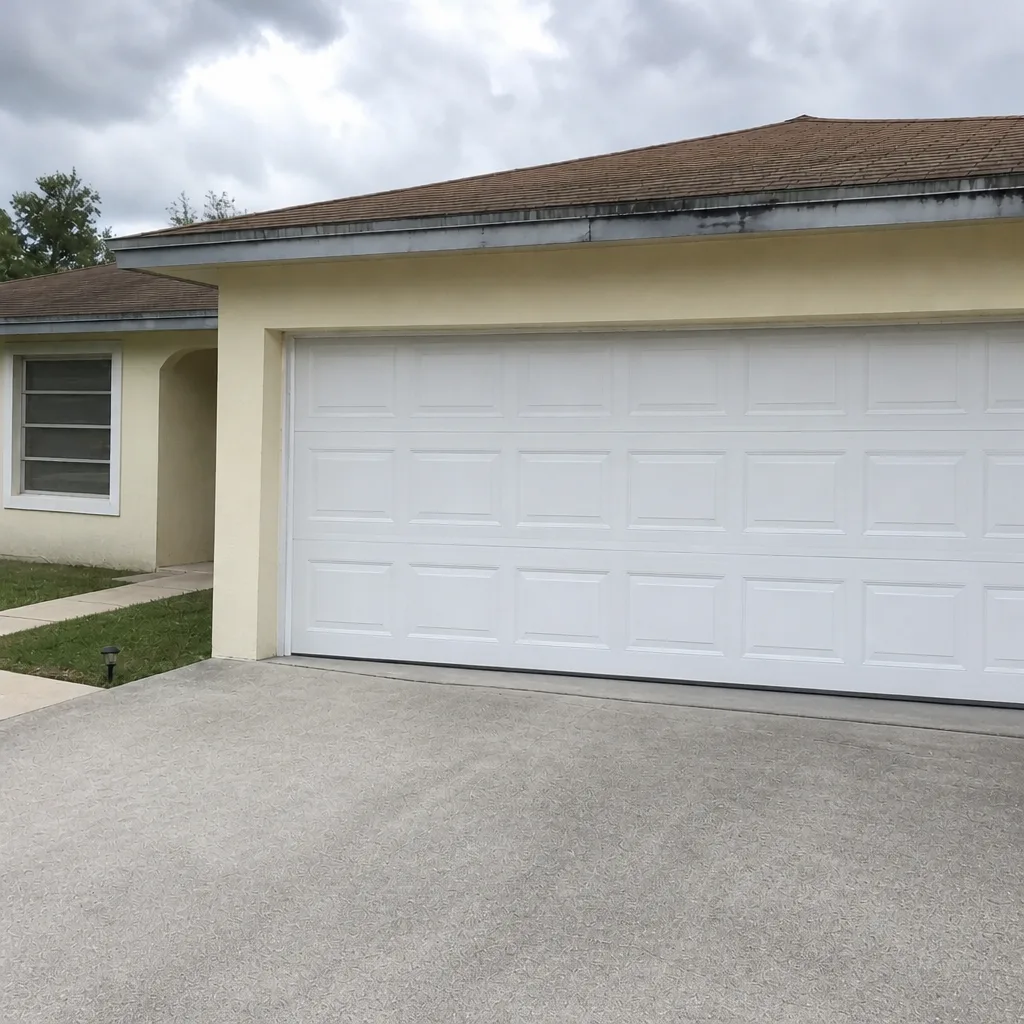 After
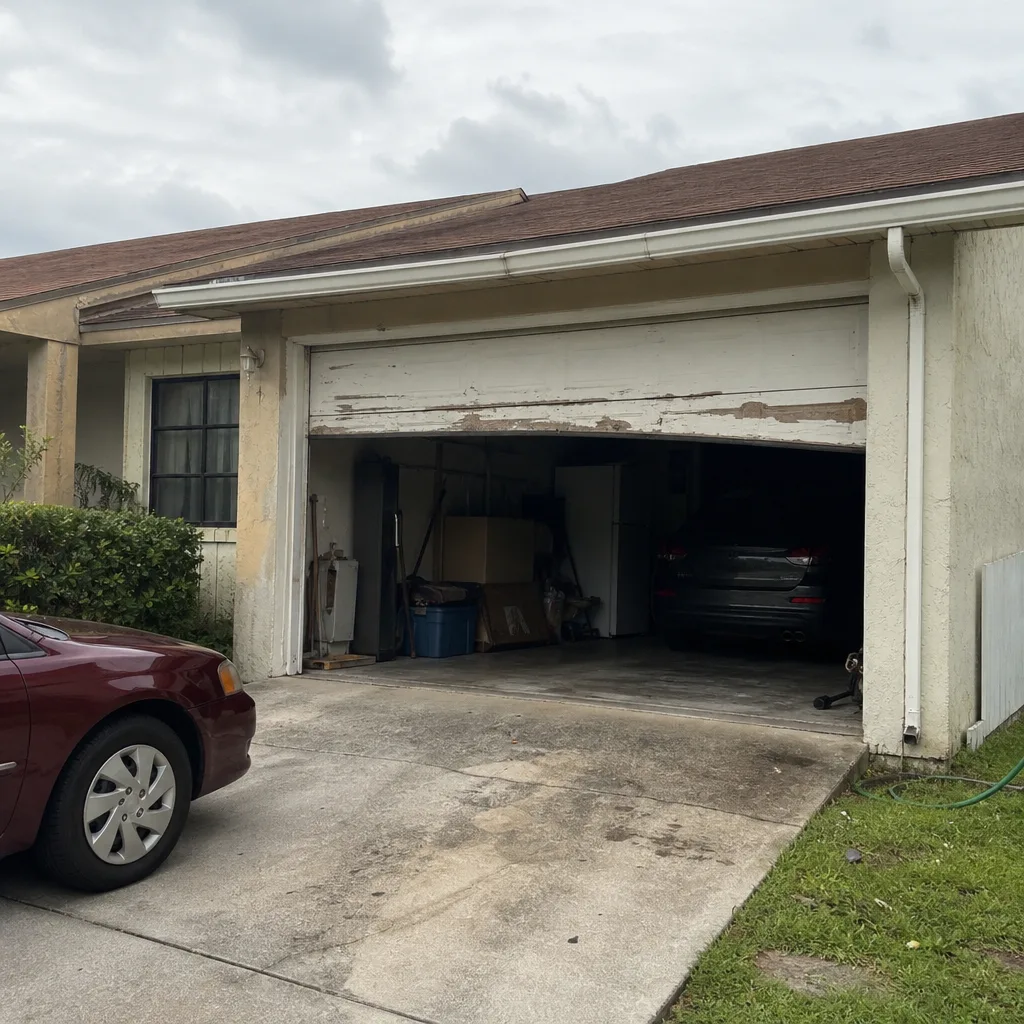 Before
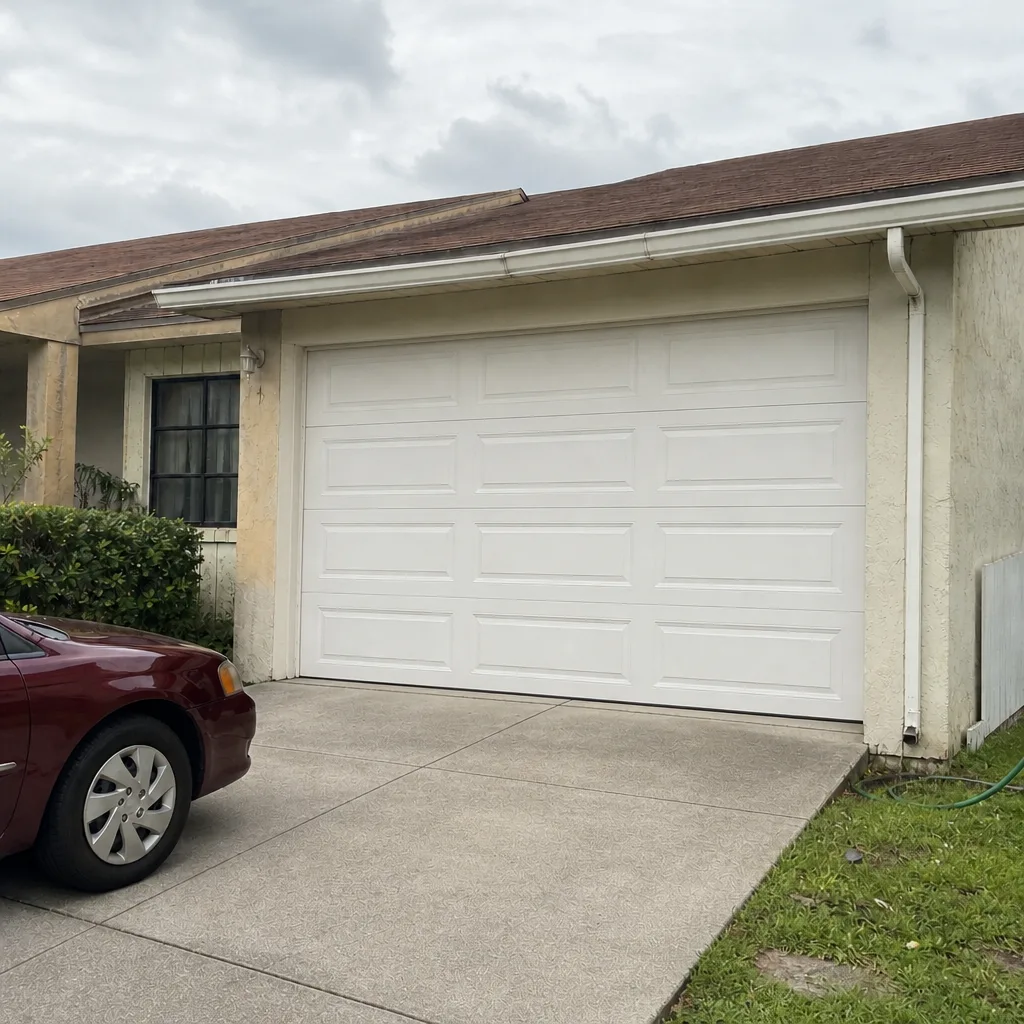 After
When to Call a Professional
Some garage door problems are obvious emergencies: a spring snaps with a loud bang and the door won’t lift, a cable frays and whips, the door hangs crooked with one side higher than the other, or the door comes off the track. Other problems are less urgent but still need a trained technician: the door reverses randomly, the opener runs but the door doesn’t move, the door is noticeably slower than it used to be, or the safety sensors keep tripping. Any of these signs means it’s time to call. Never force a door that’s visibly out of alignment; you can turn a repairable problem into a dangerous one. If you’re unsure whether your door qualifies as an emergency, call and describe it – we can tell you quickly whether it’s a today problem or a this-week problem. Homestead Garage Door Repair Pros offers free estimates in Homestead – call (844) 497-0861. We answer 24/7. Fast dispatch from 7am to 7pm, Sunday through Friday.
Frequently Asked Questions
Yes. Garage doors installed on homes in Homestead generally need a current Miami-Dade County NOA for the specific model and configuration, and the door must meet the design pressure your permit requires. The NOA is tied to the exact model, not just the brand. Ask your installer for the NOA number before signing, and confirm the approval hasn’t expired. Call (844) 497-0861 if you want help reading an NOA or confirming a model for your Homestead home.
Steel and aluminum are usually the best fit for Homestead, with fiberglass as a corrosion-resistant option when the NOA supports it. Steel holds up well when the finish stays intact and is easy to repaint; aluminum resists rust better and is lighter. Wood and wood composite require more maintenance here because of the humidity and salt air. The right choice depends on whether the door is rated, insulated, and NOA-approved in its configuration. Call (844) 497-0861 for a free estimate.
Check the NOA. “Hurricane rated” alone is a marketing phrase; the useful number is the design pressure listed on the NOA for that exact model, and it needs to meet or exceed your permit requirement. You also need to confirm the door has its rated reinforcement hardware installed – struts, brackets, and track anchors that the NOA specifies. A door with standard hardware is no longer rated. Call (844) 497-0861 if you want help reading your door’s rating.
Yes, but for a different reason than in cold climates. In Homestead, insulation slows heat transfer from the sunny exterior face into the garage, which is what you want in the summer. A higher R-value helps keep an attached garage cooler and reduces heat pushing through the shared wall into living space. The gain is largest on an insulated, sun-facing door with good perimeter sealing. Our technicians have up to 9 years of experience matching insulation to climate, and our garage door installation page explains the process.
Parts availability depends on local distributor support and whether the door or opener model is still in production. Common models from LiftMaster, Chamberlain, Genie, Clopay, Amarr, Wayne Dalton, Craftsman, and Raynor are usually quick to source, especially with a local distributor. Discontinued models or brands without local support can mean ordering and a longer repair window. If you’re looking at a specific model, call and ask about it before you commit. Call (844) 497-0861 for a free estimate.
Often, yes. Most spring, opener, and hardware failures on common models can be diagnosed and repaired on the same visit, especially when the part is in local stock. Unusual or discontinued models may need ordering, which stretches the repair into a later visit. Our fast dispatch from 7am to 7pm, Sunday through Friday, and free estimates get most Homestead repairs moving quickly. Call (844) 497-0861 – we answer 24/7.
The Bottom Line
The three forces that shape a garage door in Homestead are NOA approval, wind-load rating, and the humidity and salt air that eat at materials over time. Get all three right and you have a door that meets code, performs in a storm, and lasts. Ignore any one of them and you’re paying for a door that will either fail inspection, fail in a storm, or fail ahead of schedule. Material matters, insulation matters for heat rejection, and brand matters mostly for parts availability. If you’re weighing repair against replacement, check the math honestly – a rated door still in a rated configuration usually repairs; a corroded or de-rated door usually replaces. The team at Homestead Garage Door Repair Pros handles repair, opener repair, springs, and full installations across LiftMaster, Chamberlain, Genie, Clopay, Amarr, Wayne Dalton, Craftsman, and Raynor – so whatever your door needs, one call gets a knowledgeable technician out to look at it.
Talk to Us About Your Door in Homestead
Whether you’re weighing a new door against a repair, troubleshooting an opener that’s acting up, or you need emergency response for a door that won’t close, call (844) 497-0861 for a free estimate. We answer 24/7. Fast dispatch from 7am to 7pm, Sunday through Friday. The price is set before any work starts and confirmed in writing, so there are no surprises when the job is done. Our technicians have up to 9 years of experience with the eight major door and opener brands, and our team is ready to help you make the right call on your garage door in Homestead.
Written by the team at Homestead Garage Door Repair Pros.