
Last updated November 22, 2026
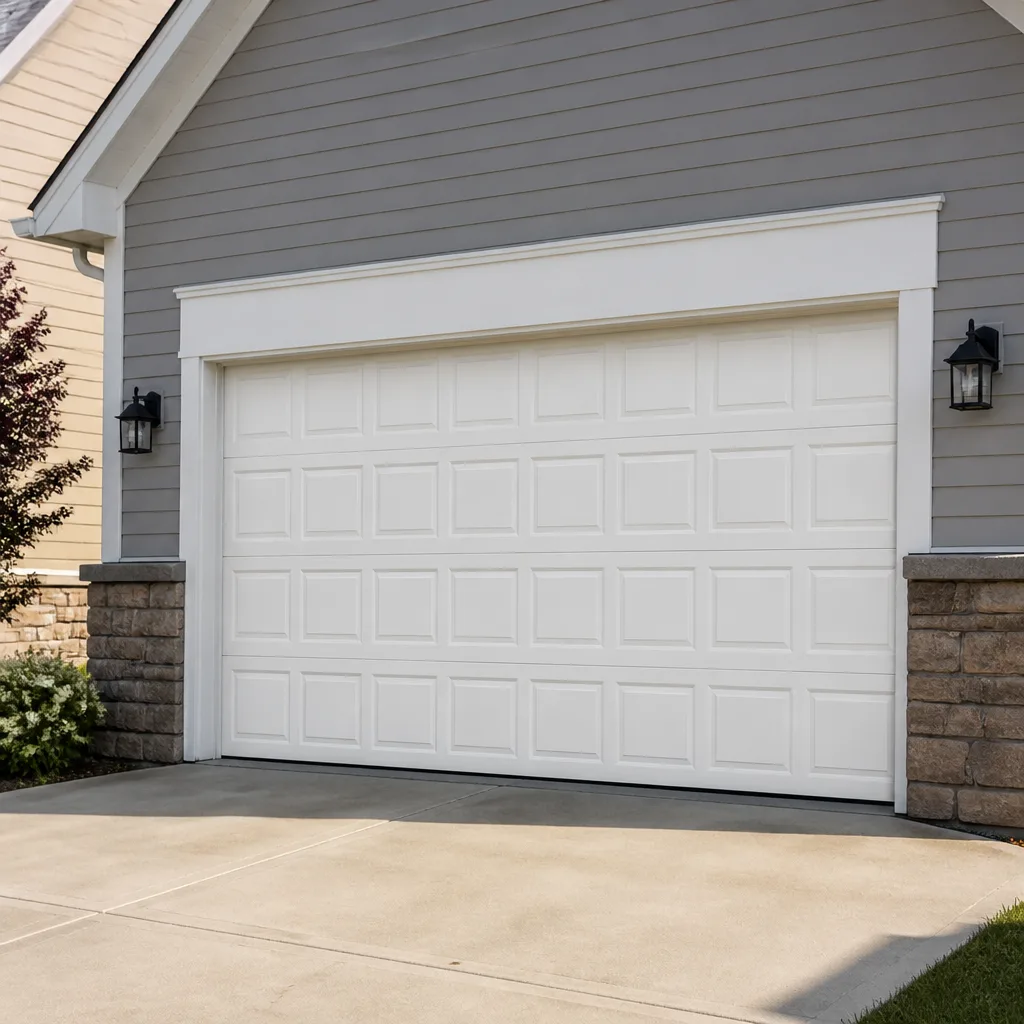 Raised-panel steel
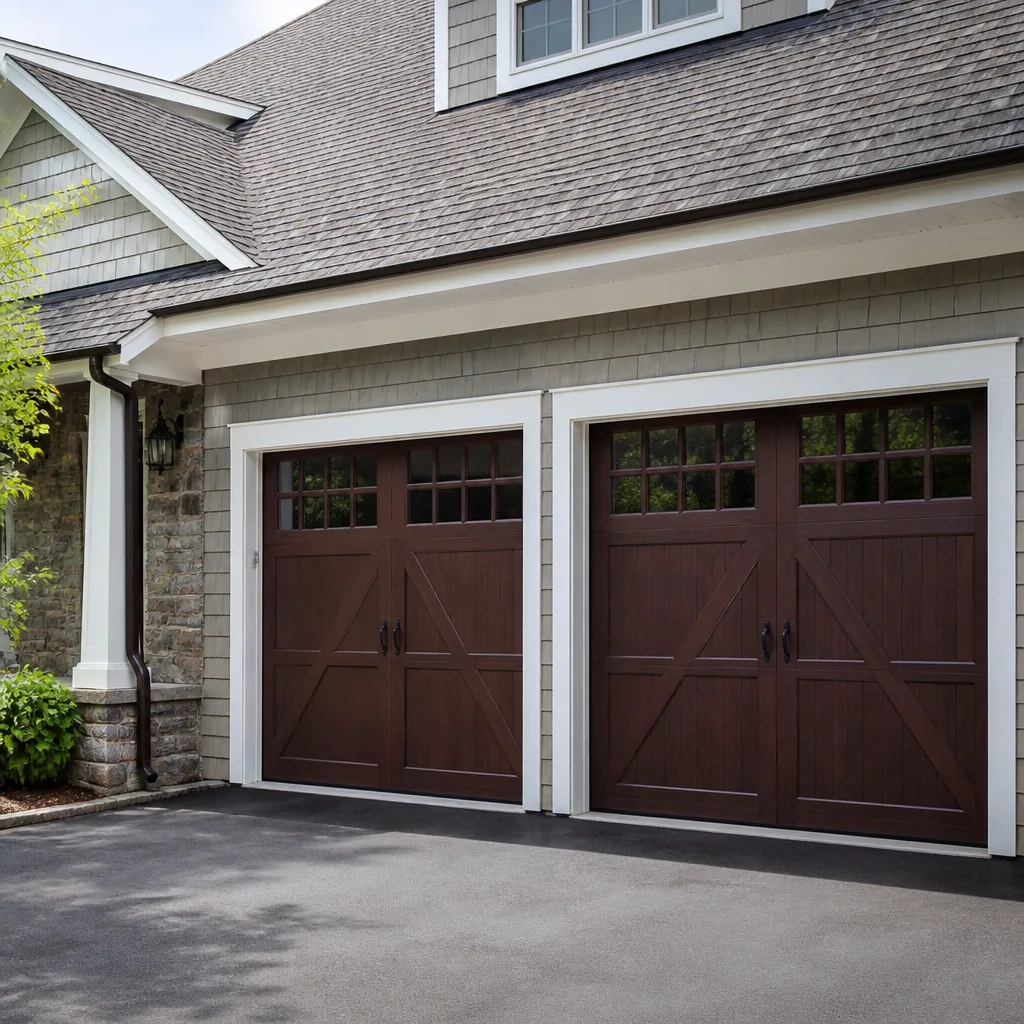 Carriage house
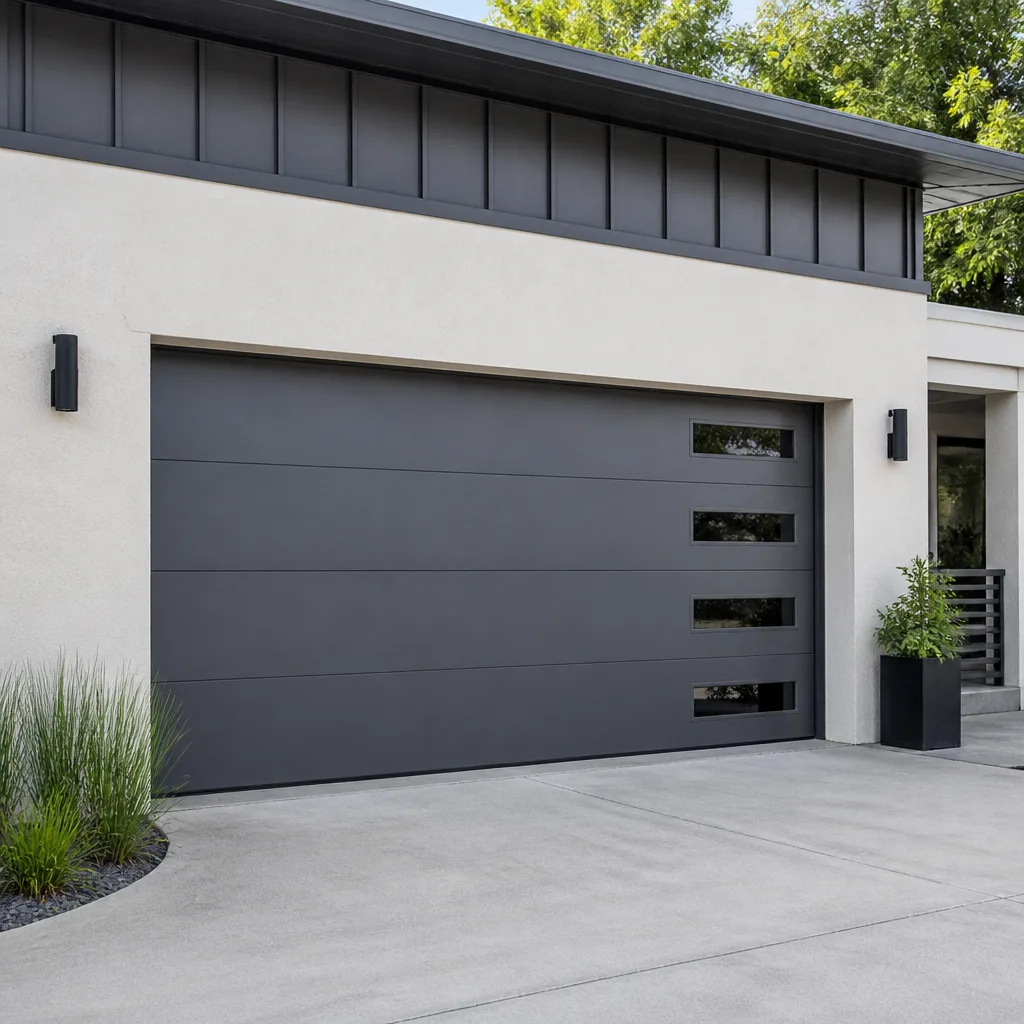 Modern flush
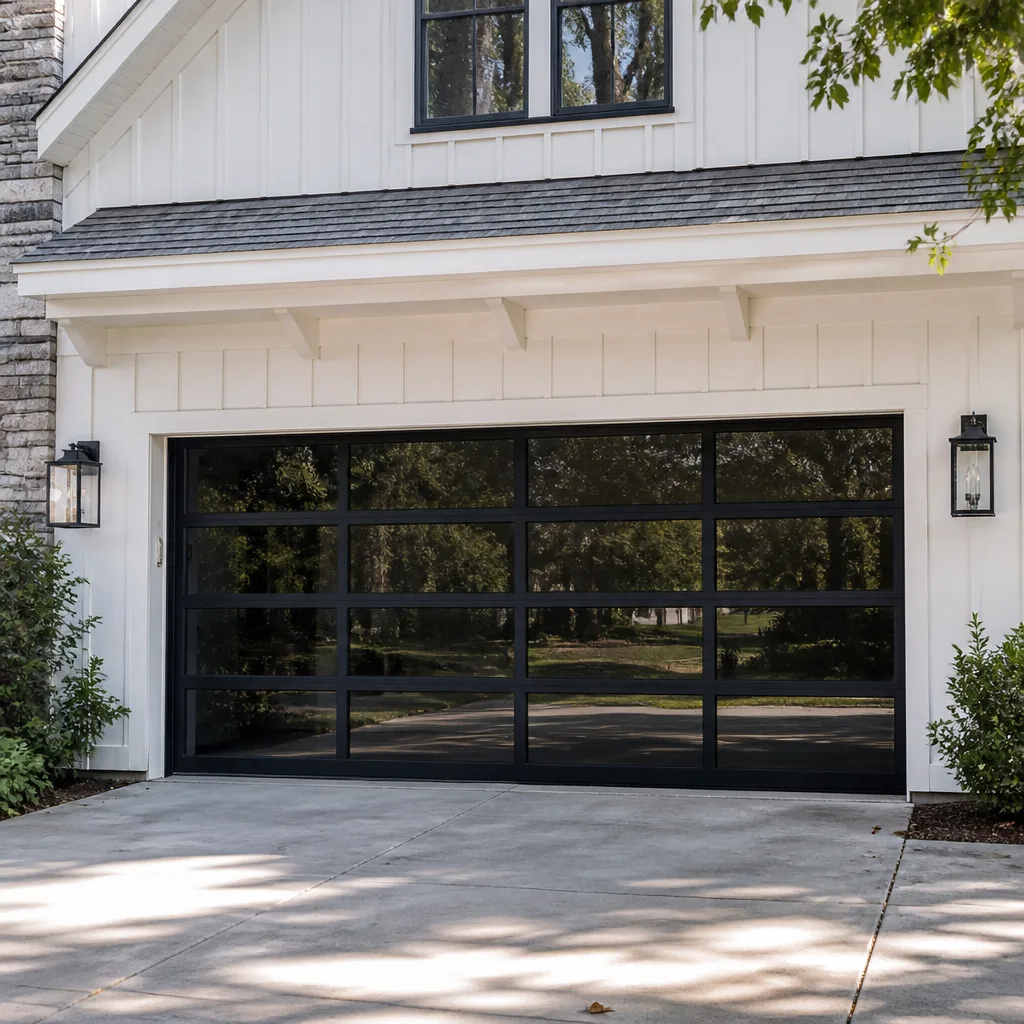 Full-view glass
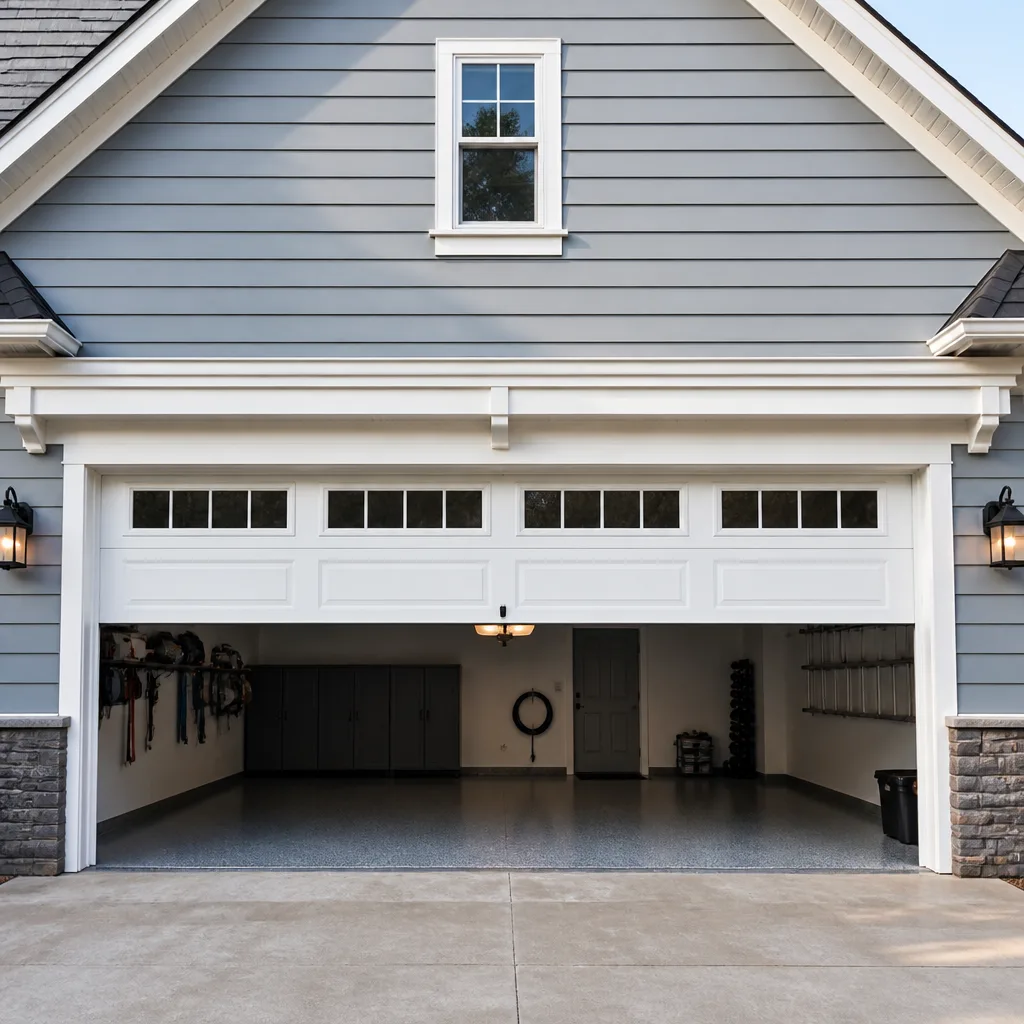 LiftMaster openers
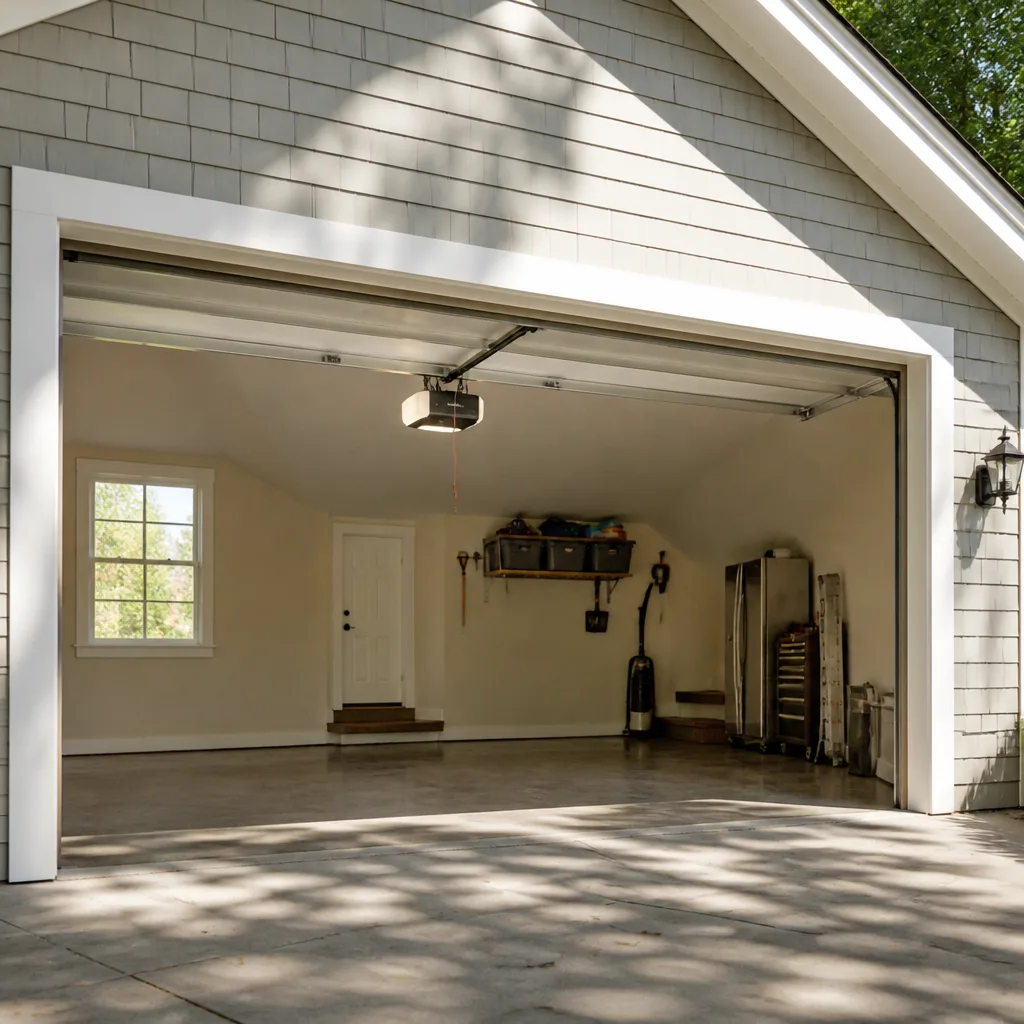 Chamberlain openers
Full 25-point door and opener safety check with every visit - springs, cables, rollers, tracks, and your LiftMaster or Chamberlain opener included
You get a price before we start. It does not change when the pro arrives.
Get your free estimateDIY vs Professional Garage Door: The Homestead Homeowner’s Decision Guide
Most garage door tutorials on the internet were filmed somewhere else, and that matters more than you’d expect. Torsion springs store enough energy to injure someone badly when they let go, and that physics is the same everywhere. But here in Homestead, there’s a second layer the videos rarely mention: Florida law requires a licensed contractor to pull permits for a full door replacement, and the permitting rules in Miami-Dade are stricter than in much of the country. Add an insurance market that scrutinizes unpermitted work after a storm, and the list of things you can safely and legally do yourself gets shorter than YouTube implies. This guide walks through what’s genuinely DIY-safe, what’s a hard no, and where the two overlap.
Quick Answer
In Homestead, you can safely and legally handle lubrication, safety sensor alignment, remote reprogramming, and bottom seal replacement yourself. Torsion spring work, cable replacement, track realignment, opener motor swaps, and full door replacement should go to a licensed professional: springs are dangerous, and a replacement door requires a permit pulled by a licensed contractor. Anything involving an unpermitted structural or door change can complicate a homeowner’s insurance claim after a storm.
Styles & brands we work with
- Raised-panel steel
- Carriage house
- Modern flush
- Full-view glass
- LiftMaster openers
- Chamberlain openers
Table of Contents
- The Task-by-Task Decision Table
- What Florida Law and Miami-Dade Permitting Actually Require
- The DIY-Safe Tasks That Save Real Money
- Why Torsion Springs Are a Different Animal
- How Unpermitted DIY Work Affects Insurance in Florida
- How to Work With a Contractor After Partial DIY Prep
- Repair or Replace? The Decision Framework
- Brand and Opener Considerations in Homestead
The Task-by-Task Decision Table
Before anything else, here’s the straight answer on what you should and shouldn’t attempt. This is the table we’d hand a neighbor. In our experience, most of the costly mistakes we see in Homestead come from homeowners who didn’t realize one row here was a permit-required job, or didn’t know a torsion spring was on the “no” side.
- Lubrication of hinges, rollers, and tracks – DIY safe. Ten minutes, a can of garage door lubricant (not WD-40), and you’ve eliminated the most common squealing complaint.
- Safety sensor alignment and cleaning – DIY safe. If your door reverses the moment it meets the floor, one of the two sensors near the door’s base is likely blocked, dirty, or misaligned. The LED indicator on each sensor tells you which one.
- Remote control and keypad reprogramming – DIY safe. Every major opener brand has a pairing procedure that takes under five minutes. We’ll cover the common ones below.
- Bottom seal (astragal) replacement – DIY safe for most door styles. This is the rubber strip along the bottom edge that seals gaps. Sand and grit on a Homestead driveway chew through it every few years.
- Torsion spring replacement – Professional only. Physics reasons below.
- Extension spring replacement – Professional only. Less energy stored than torsion, but still enough to cause serious injury if released wrong and no place to improvise.
- Cable replacement – Professional only. Cables are always under tension and are what hold the door’s weight when the spring is loaded.
- Track realignment or panel replacement – Professional. A bent track means the door is riding wrong, which usually has a root cause one layer deeper than the visible damage.
- Opener motor or logic board swap – Professional, unless you’re swapping an identical unit already in place and you know how to swap the carriage. A mismatched rail and motor is a common DIY failure.
- Full door replacement – Licensed contractor and permit required. More below.
That middle block of professional-only tasks is where the real risk concentrates. If you’re dealing with a broken torsion spring, that’s our garage door spring repair page for a deeper dive, but the short version is: don’t.
What Florida Law and Miami-Dade Permitting Actually Require
Florida requires a licensed contractor to pull permits for a garage door replacement, and Miami-Dade County enforces its own stricter code on top of that. That means if your plan is to remove an existing door and install a new one, you cannot legally do it yourself as a homeowner without a licensed contractor on the permit, and Miami-Dade is one of the jurisdictions in the country that takes door product approval seriously. Replacing a door “in kind” (same size, same rating) with a licensed contractor is a smooth process. Trying to sneak a door change without a permit is what gets expensive later.
What the code does not regulate, and what you can do without a permit:
- Lubrication, cleaning, and adjustment of a door that’s already installed
- Replacing a bottom seal, weatherstripping, or threshold
- Reprogramming remotes, keypads, or the opener’s travel limits
- Repairing a side-lock or handle on a manual door
- Aligning safety sensors
The line is roughly: anything that changes the door structure, replaces a load-bearing component, or alters how the door is attached to the building is permit territory. Anything that restores an already-installed door to working order and doesn’t touch structure is generally fine. If you’re not sure which side of the line a specific job is on, call your city’s building department before you spend money or time on it.
Miami-Dade has its own product approval system for impact-rated products, and garage doors fall under that scope for many installations. The contractor you hire should be able to tell you which approved product they’re installing and show you the documentation. If a contractor waves this off as “not needed,” that’s a warning sign in this county.
The DIY-Safe Tasks That Save Real Money
Here’s where DIY genuinely pays for itself. None of these are world-changing savings on their own, but they add up over a door’s life, and they’re jobs that don’t put you at risk.
- Monthly lubrication. A two-dollar can of garage door lubricant applied to hinges, rollers, and the torsion spring coil (not the tracks) every couple months will keep the door quiet and slow wear. Don’t use grease or a general-purpose spray oil; door lubricant is spec’d for the job.
- Sensor check and alignment. With the door open, check that both sensor LEDs are lit steady (green or amber, depending on brand). If one is off or blinking, clean the lens with a soft cloth first. If that doesn’t fix it, loosen the sensor’s bracket bolts and pivot it until the LED goes solid. Re-tighten. This one job probably accounts for a third of the “my door won’t close” calls we hear about.
- Remote reprogramming. If you bought a new remote or one of the kids pressed the wrong combination, you don’t need a technician. LiftMaster and Chamberlain openers use a “learn” button on the back of the motor head; press it, then press the remote’s button twice within a short window. Genie and most Craftsman units use a similar learn procedure. The manual or the brand’s app will walk you through the exact sequence for your model.
- Bottom seal replacement. The rubber seal along the bottom edge presses into a channel; a new one slides in or fastens with a few screws. Measure the door width in inches and order a matching seal. Takes 30 minutes and costs a fraction of a service call.
- Track wiping. Wipe down the tracks with a damp cloth and dry them. Do not lubricate the tracks: the door’s rollers are designed to roll on clean metal, and oil attracts grit that will grind them down.
These five tasks cover more than half of the routine service items a garage door needs across its life. If a door is otherwise sound, that’s a reasonable annual maintenance routine you can own yourself.
Why Torsion Springs Are a Different Animal
A torsion spring is a coiled steel rod holding the weight of your entire garage door under tension. Depending on the door, that’s the equivalent of lifting hundreds of pounds, always. The spring is what makes a hundred-pound door feel like thirty. When it breaks, all that stored energy releases at once, and if you’re standing in the wrong place with a winding bar in hand, the injury can be serious and sometimes permanent. This is not a “be careful” situation. It’s a “specific tools, specific training, specific procedure” situation.
Here’s what that means practically for a Homestead homeowner:
- The spring is under tension even when the door is closed. “Letting it down easy” isn’t a thing.
- Winding bars are the correct tool for releasing and resetting tension. Screwdrivers and vice grips slip, snap, or spin.
- Springs come in matched pairs on most doors. Replacing one without the other is a common mistake that can cause uneven wear and premature failure of the new spring.
- New springs are matched to door weight and height. The wrong spring is either going to fail faster or overload the torsion tube.
- Cables are wound around the torsion tube and connect to the door. They’re under the same load as the spring, and they’re not a separate project.
If you’re the type who can rebuild a motorcycle, you have our respect. But motorcycles don’t hold several hundred pounds of stored energy in a coil two feet from your face. This is the one garage door job where the honest answer is always: call a professional. That’s what garage door spring repair done by a trained technician is for. Our team has handled this job enough times to know the failure points and the tools required.
How Unpermitted DIY Work Affects Insurance in Florida
An unpermitted garage door replacement can complicate a homeowner’s insurance claim in Florida if a loss is later tied to that door. This is the second reason the DIY vs professional question is different in Homestead than in most of the country. Not because every insurer will deny every claim, but because claims involving structural work with no permit on file get scrutinized, and the burden of proof lands on you.
What to look for in your own policy:
- Language about “permitted work” or “code compliance.” Many Florida policies have clauses that allow the insurer to reduce or deny a claim for damage caused by work that wasn’t done to code. A door installed without a permit is the definition of that.
- Language about “material change to the structure.” A new door on the same opening often counts. A new door that required widening the opening definitely does.
- Language about “approved products” in wind-borne debris regions. Miami-Dade sits inside the state’s wind-borne debris region, and approved product documentation is what backs up a claim if the door fails in a storm.
- Your policy’s loss settlement provisions. If a claim involves an unpermitted component, some insurers settle using an older valuation or exclude that component entirely.
If you’re reading your policy and not sure how it applies, call your agent and ask two direct questions: “If I replace my garage door with a licensed permit, is it covered?” and “If a claim involves my garage door, what documentation would you need?” Get the answers in writing if you can. It’s a five-minute phone call that clarifies a lot.
As a matter of course, a licensed contractor handling a Homestead door replacement will pull the permit and can give you the inspection documentation. That’s the paper trail your insurer will want to see if the door ever becomes part of a claim.
How to Work With a Contractor After Partial DIY Prep
Sometimes you’ve already started. Maybe you removed the old opener, or pulled the tracks off, or got partway into a spring swap and stopped when you realized how much tension that coil was under. That’s fine; you’re not the first. Here’s how to work with a professional cleanly from that starting point.
What helps:
- Photograph what you removed. Model numbers, brand names, the way components came off. A photo of the old opener’s data plate saves ten minutes of searching.
- Bag the fasteners and label them. If you’ve pulled hardware off, keep it together. A coffee can of loose screws isn’t useful, but a labeled bag per component is.
- Note what the door was doing before you touched it. Was it sticking halfway? Did the opener grind? Did the door feel heavy? Symptoms are the fastest path to the right diagnosis.
- Tell the tech what you tried. No judgment. If you tightened a track or adjusted the travel limits and made it worse, that’s information that shortens the call.
- Leave the door in the position it’s in if it’s safe. Don’t try to “help” the door down or up. A door with a broken spring can fall.
What complicates the job:
- Cutting cables or unbolting the torsion tube. Once the cable is off, the door’s weight can shift unexpectedly and there’s nothing holding it back.
- Mixing components from multiple door systems (mismatched rails, carriages, or springs from a different door weight).
- Starting a permit-required replacement and then calling a contractor to “finish it.” The contractor will need to redo the permitted scope from the beginning, in most cases. Better to call first.
- Removing the door’s attachment points from the wall or header without reinforcing the structure. A door that was designed to hang from a specific header is not “close enough” to something else.
If you’ve already done any of the above, don’t panic. Call and describe what you’ve done. The technician will let you know what’s recoverable and what needs to be reset.
Repair or Replace? The Decision Framework
A door that’s failing doesn’t automatically mean a new door. Most Homestead homes are looking at repair or replacement depending on four factors, and you can usually narrow it to one answer in a few minutes.
Repair is usually the right call when:
- The door is under 15 to 20 years old and the panels are solid
- Only one component failed (spring, cable, opener, one roller set)
- The door travels smoothly after the failed component is replaced
- The insulation, sealing, and finish are still doing their job
Replacement is usually the right call when:
- Multiple panels are dented, rusted through, or have separated from the frame
- The door has been in a collision and the tracks and header are bent
- The opener, springs, rollers, and panels are all at end of life together
- You want a different style, size, or insulation value
- The existing door is not a permitted, approved product and you’re replacing it anyway
In between, a good technician can give you an honest assessment. That’s the garage door repair conversation we have with homeowners most often: is this repair throwing good money after bad, or is it the right fix for the next five years? Replacement work is measured, ordered, scheduled, and inspected; repair work can often be done on the same visit.
Brand and Opener Considerations in Homestead
What’s on the door in your Homestead home probably came from one of a handful of brands. Most openers are LiftMaster, Chamberlain, Genie, or Craftsman. Most doors are Clopay, Amarr, Wayne Dalton, or Raynor. That’s roughly the landscape across this area, and it’s the same eight-brand lineup our technicians are prepared to work with on any given call.
Why that matters to the DIY vs professional decision:
- Parts availability. Common brands are easier to source, and technicians who work with them regularly know the failure patterns. That’s faster for you.
- Opener programming. If you’re doing your own remote work, the exact sequence is brand-specific. LiftMaster and Chamberlain share a “learn” button workflow; Genie and Craftsman are close but not identical.
- Replacement parts matching. A commercial-grade opener on a residential door, or a door panel from a discontinued model, can’t always be matched to existing hardware. A pro will tell you what’s replaceable and what isn’t.
If you’re calling for garage door opener repair, mention the brand and model if you know it. If you don’t, a photo of the unit’s data plate will do. That one detail can cut the visit time in half and helps ensure the technician arrives prepared. For broader coverage and to see how all of this connects, our Homestead Garage Door Repair Pros page lays out the full service lineup.
Common Mistakes to Avoid
- Using WD-40 on hinges, rollers, or springs. It’s a solvent, not a lubricant, and it strips the existing grease. Use door-specific lubricant from any hardware store; it costs about the same and works far better.
- Replacing one torsion spring when the pair has failed. If one spring broke, the other is likely near end of life too, and a mismatched new spring will wear unevenly. Replace both together on any matched-pair system.
- Filing a permit for a replacement but hiring a friend with a truck. Homeowner-builder permits are typically allowed for a homeowner’s own principal residence, but a licensed contractor’s permit is what insurers and inspectors want to see for a garage door replacement. Use the contractor.
- Assuming “it’s just a spring.” A torsion spring is the heaviest single load in the door’s system. DIY spring work is the leading cause of injury in garage door service, which is the reason most reputable companies will not sell a customer a spring as a part.
- Adjusting the opener’s travel limits without knowing what you’re doing. The opener’s limit switches tell it where the door begins and ends. Turning these can cause the door to overrun the rails or close before the safety sensors detect something under it. If the door is stopping short, the fix is usually sensor alignment, not limits.
- Ignoring a visible gap at the bottom of the door. A worn seal lets in water, insects, and outside air. In our mild, humid Homestead climate, that shows up as corrosion on the bottom panel and door hardware faster than people expect. Check the seal in spring and replace it if it’s brittle or torn.
- Starting a permitted replacement yourself. Once you’ve removed the old door and the permit is in your contractor’s name, a contractor still has to re-permit the scope to sign off. Call first, and let the licensed contractor pull the permit.
See the difference
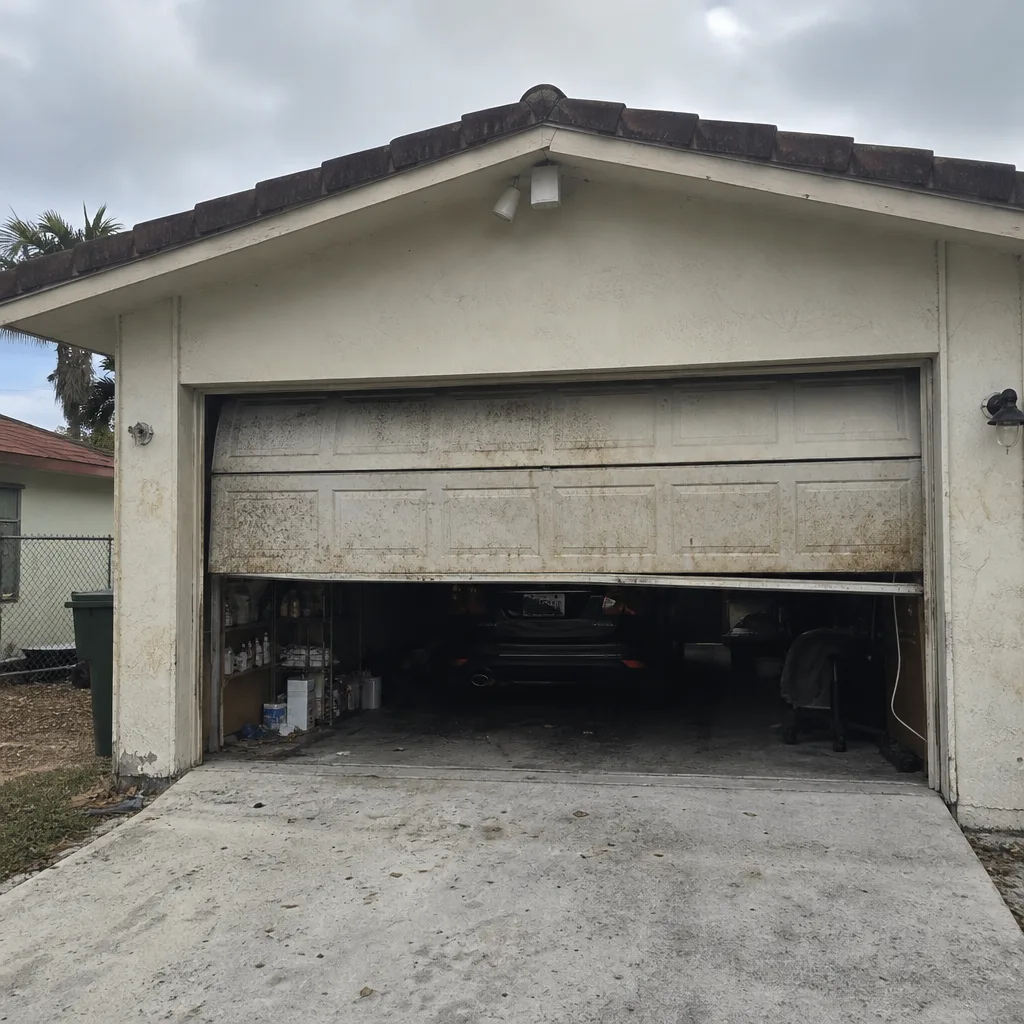 Before
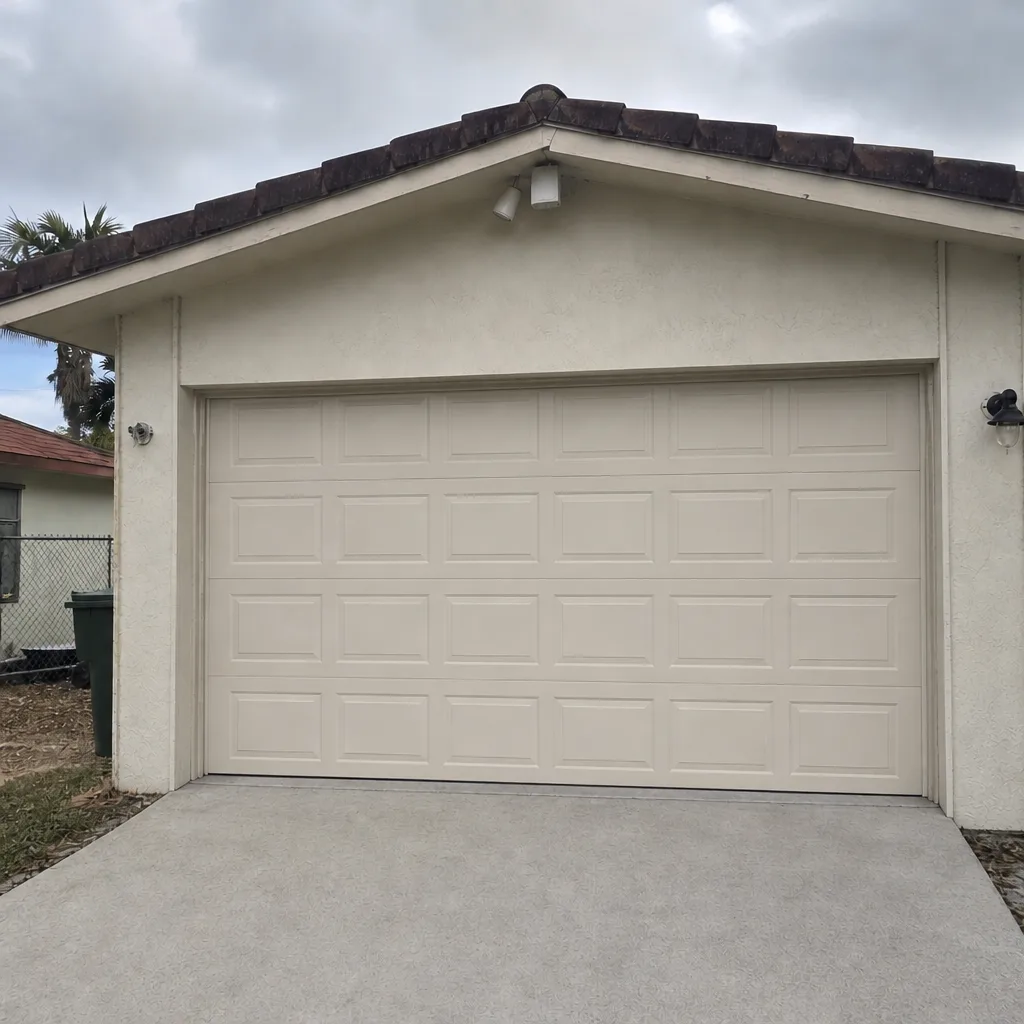 After
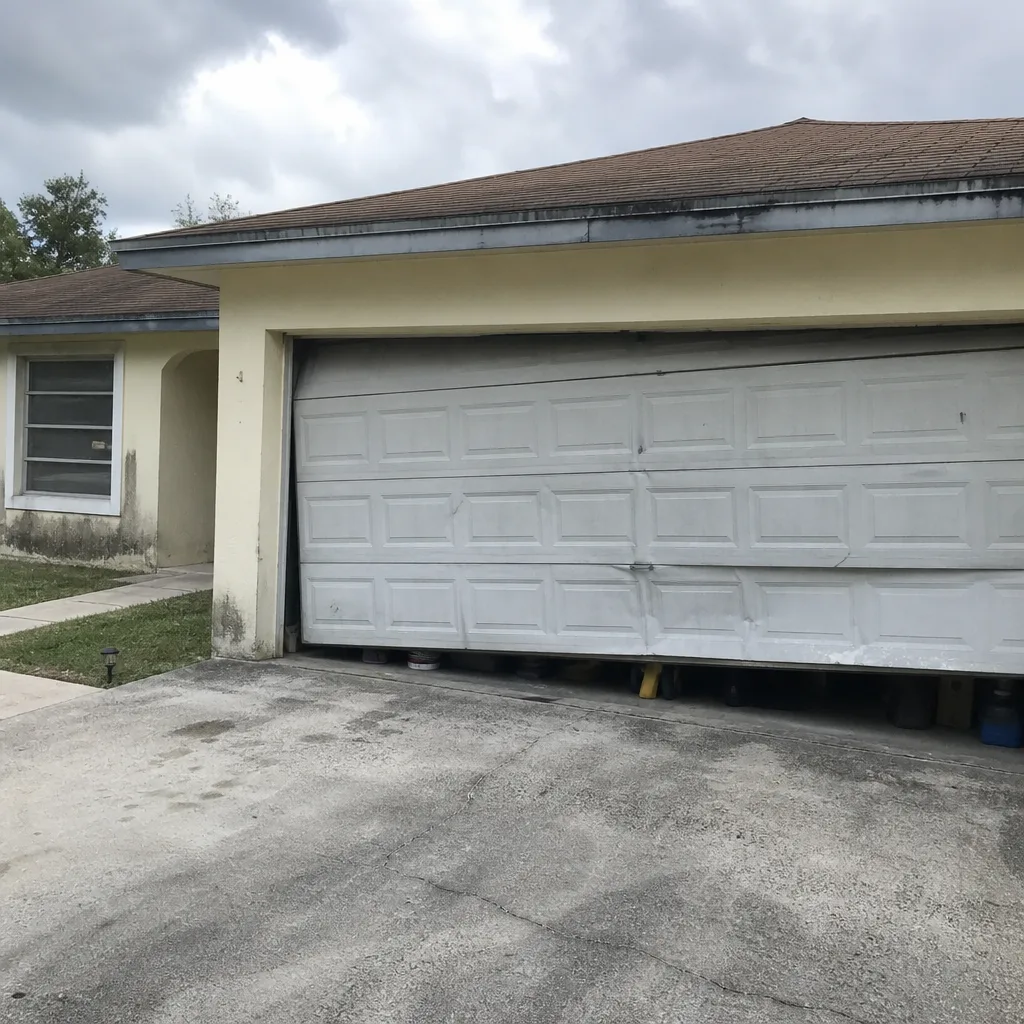 Before
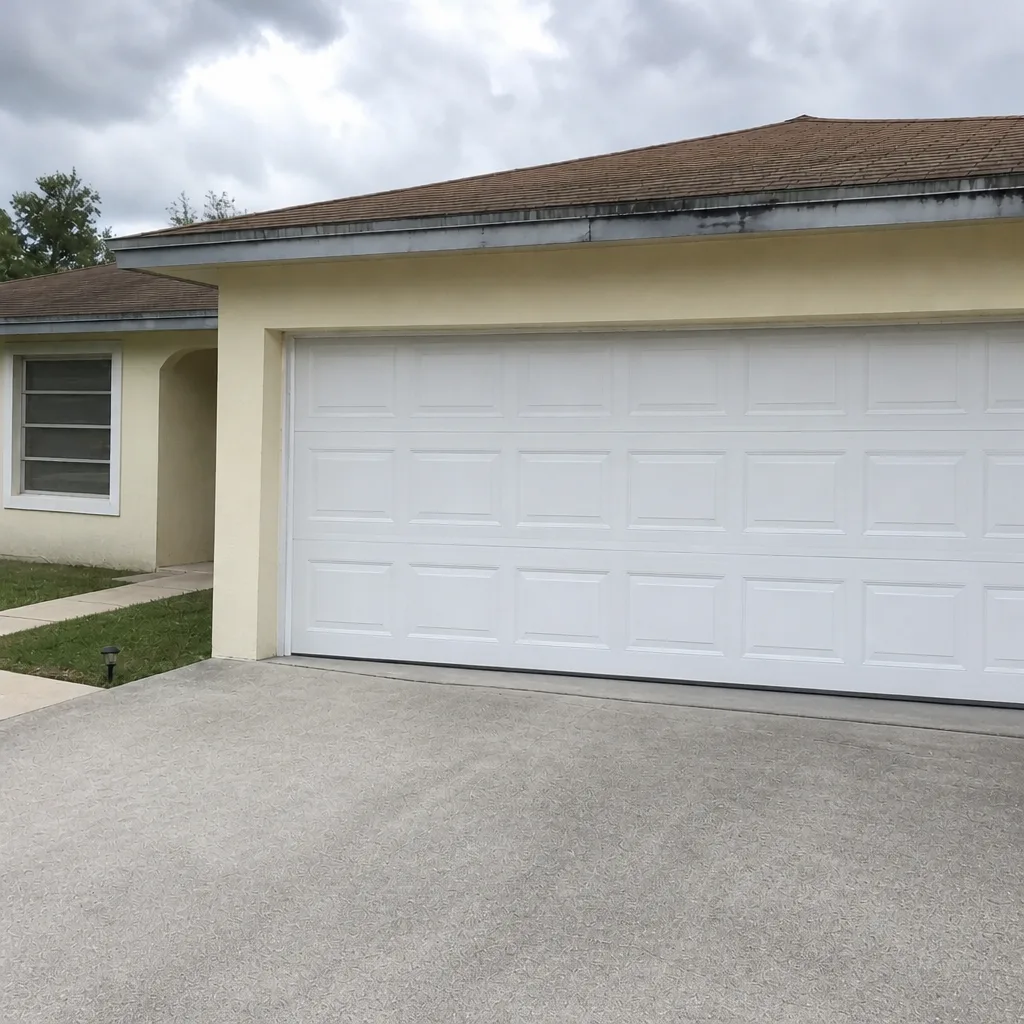 After
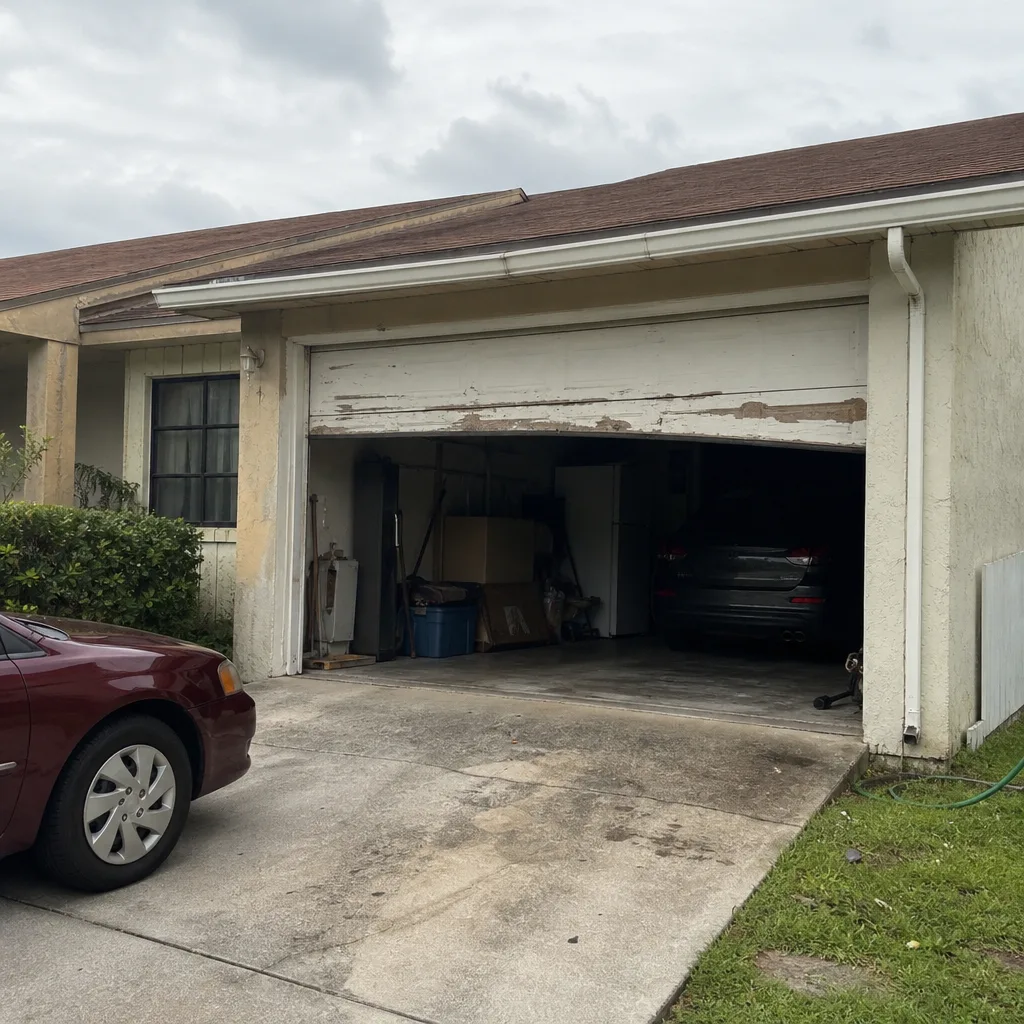 Before
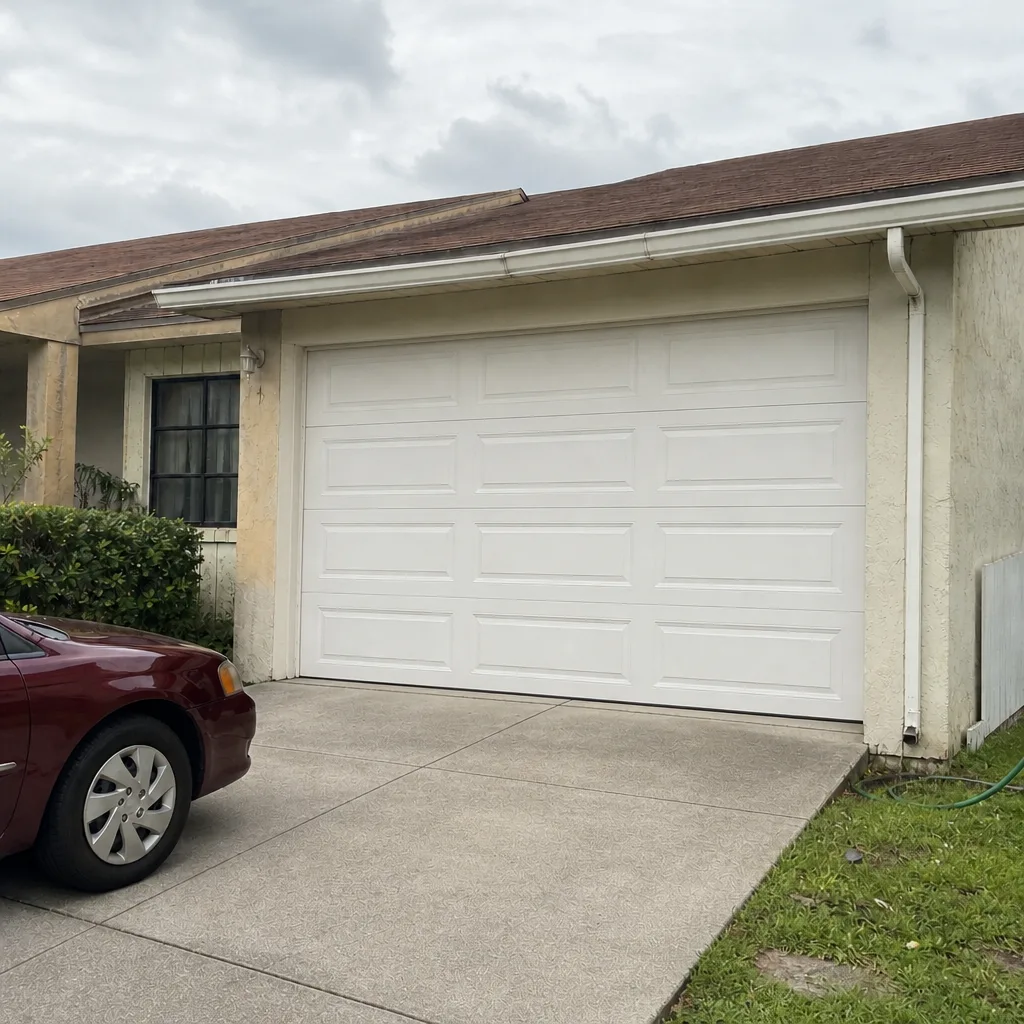 After
When to Call a Professional
Call a professional – today, not next month – if any of these is true: the door has a broken torsion or extension spring; the door has come off one or both tracks; a cable is frayed or loose; the door will not close fully (a safety and security issue); a car has hit the door; the opener motor runs but the door doesn’t move; you need a replacement door and permit; or you’ve started a repair and the door is now in a more dangerous state than it was. We also recommend calling for any opener problem you can’t solve with the manual in front of you, since mismatched replacement parts are common and can cause damage to the rails and door.
Homestead Garage Door Repair Pros offers free estimates in Homestead – call (844) 497-0861. We answer 24/7. Fast dispatch from 7am to 7pm, Sunday through Friday. Our technicians have up to 9 years of experience and work with all eight leading garage door and opener brands. The price is set per job by the written estimate, and it’s quoted and agreed before any work begins.
Frequently Asked Questions
No, not legally as a standard replacement, because Florida requires a licensed contractor to pull the permit for a garage door replacement, and Miami-Dade County adds its own product-approval requirements on top. Attempting it yourself risks permit violations, a failed inspection when you sell, and complications with an insurance claim. Call (844) 497-0861 for a free estimate and we’ll walk you through the permit process.
No. A torsion spring stores enough energy to cause serious injury if it releases unexpectedly, and the correct procedure requires specific tools (winding bars) and training that most homeowners don’t have. Spring repair is a professional job, and it’s one our technicians handle routinely. Call (844) 497-0861 for a free estimate on the exact repair.
Safety sensor alignment is the easiest and the one that solves the most “door won’t close” calls. Lubrication, remote reprogramming, and bottom seal replacement are also safe DIY tasks with real savings. Call (844) 497-0861 if you’ve tried those and the door still isn’t working right; the estimate is free.
It can, if a claim involves the unpermitted door and your policy has code-compliance or approved-product language. Read the sections on “permitted work,” “material changes,” and “code compliance,” and ask your insurer directly. Working with a licensed contractor who pulls the permit is what keeps the paper trail clean. Call (844) 497-0861 for a free estimate on a permitted replacement.
In most cases, yes. Our technicians work with LiftMaster, Chamberlain, Genie, Clopay, Amarr, Wayne Dalton, Craftsman, and Raynor equipment. If you know the brand and model, mentions of it when you call will help us arrive prepared. Call (844) 497-0861 with the model number if you have it.
We’ll assess the situation and let you know what’s recoverable. Stop touching the door if it’s a spring, cable, or track problem and it’s now in an unstable state. Call (844) 497-0861 and describe what you’ve done; the technician will plan the visit around that. The estimate is free and the price is quoted before any work starts.
The Bottom Line
The DIY vs professional decision on a garage door isn’t one question in Homestead; it’s several. Lubrication, sensors, remotes, and bottom seals are yours to own. Springs, cables, tracks, structural work, and full door replacements are professional territory, both because of the stored energy involved and because of how Florida’s permit and insurance rules work. If you’re anywhere near the line, the safest, cheapest call is to get a free estimate first: a technician can tell you in minutes whether it’s a repair, a replacement, or something you can safely take on yourself. The right answer usually is one call, not a stack of home repair videos.
Call (844) 497-0861 for a free estimate. We answer 24/7. Fast dispatch from 7am to 7pm, Sunday through Friday.
Written by the team at Homestead Garage Door Repair Pros.