
Last updated November 22, 2026
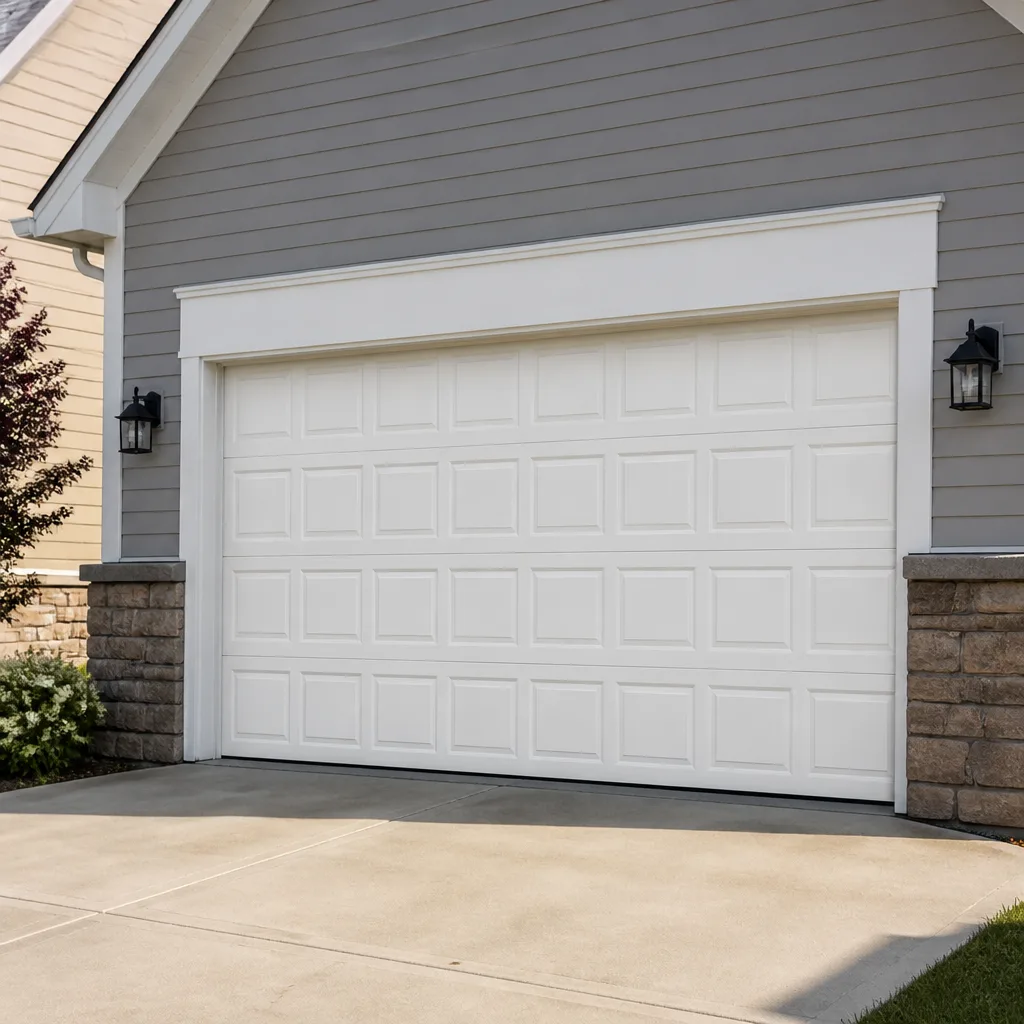 Raised-panel steel
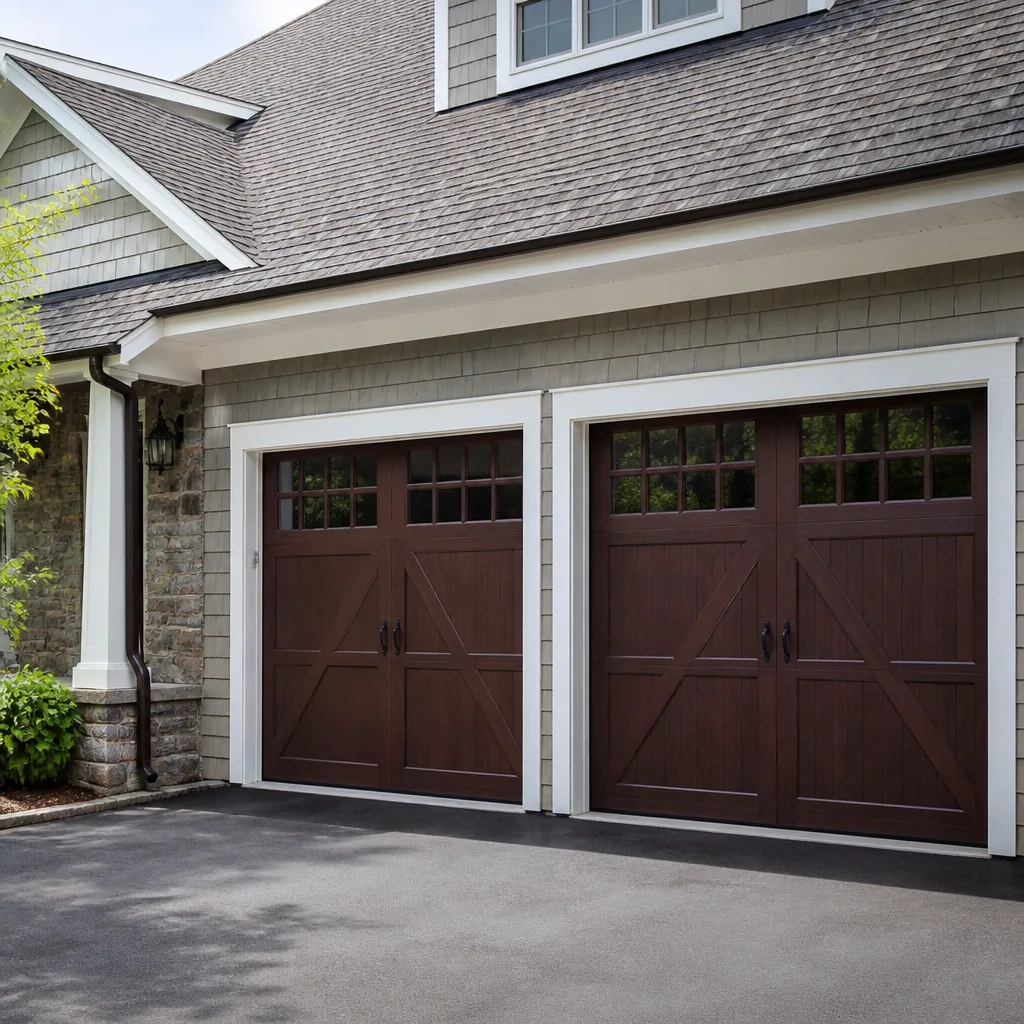 Carriage house
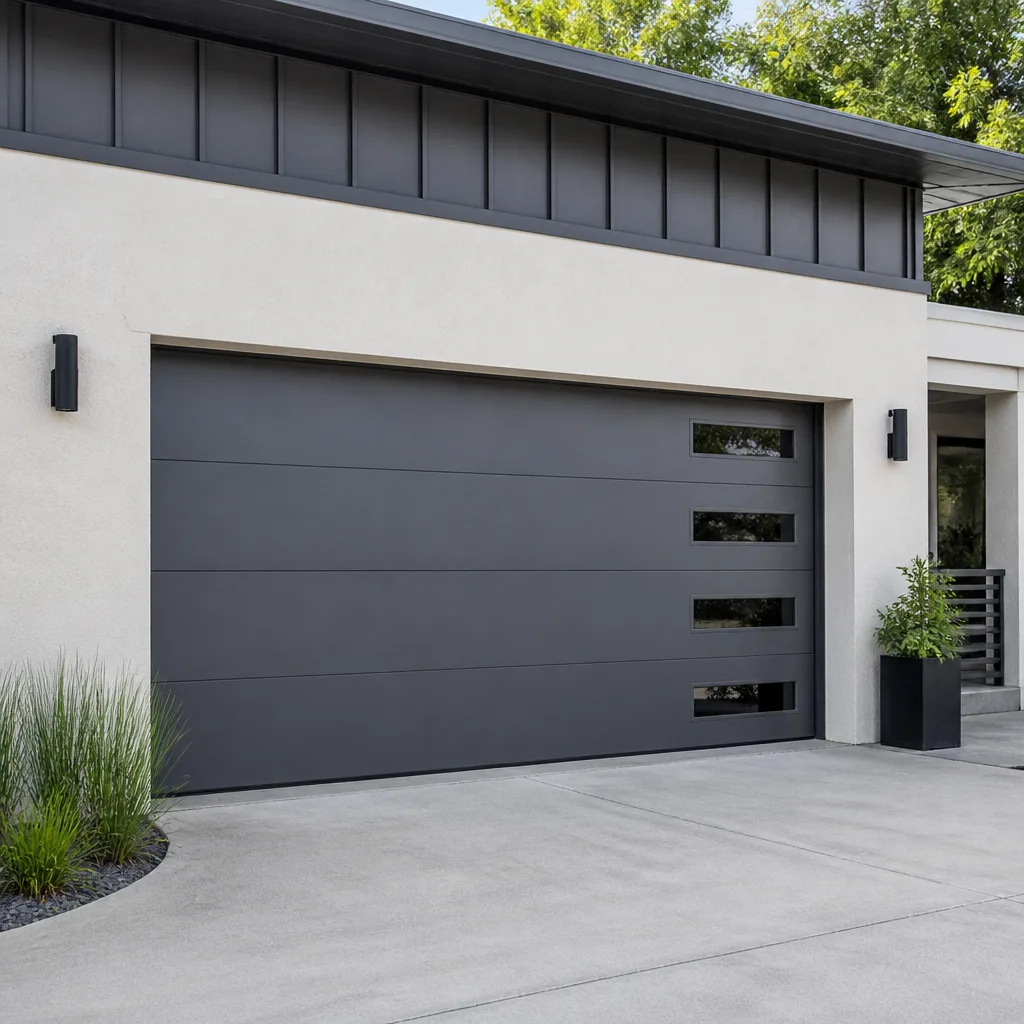 Modern flush
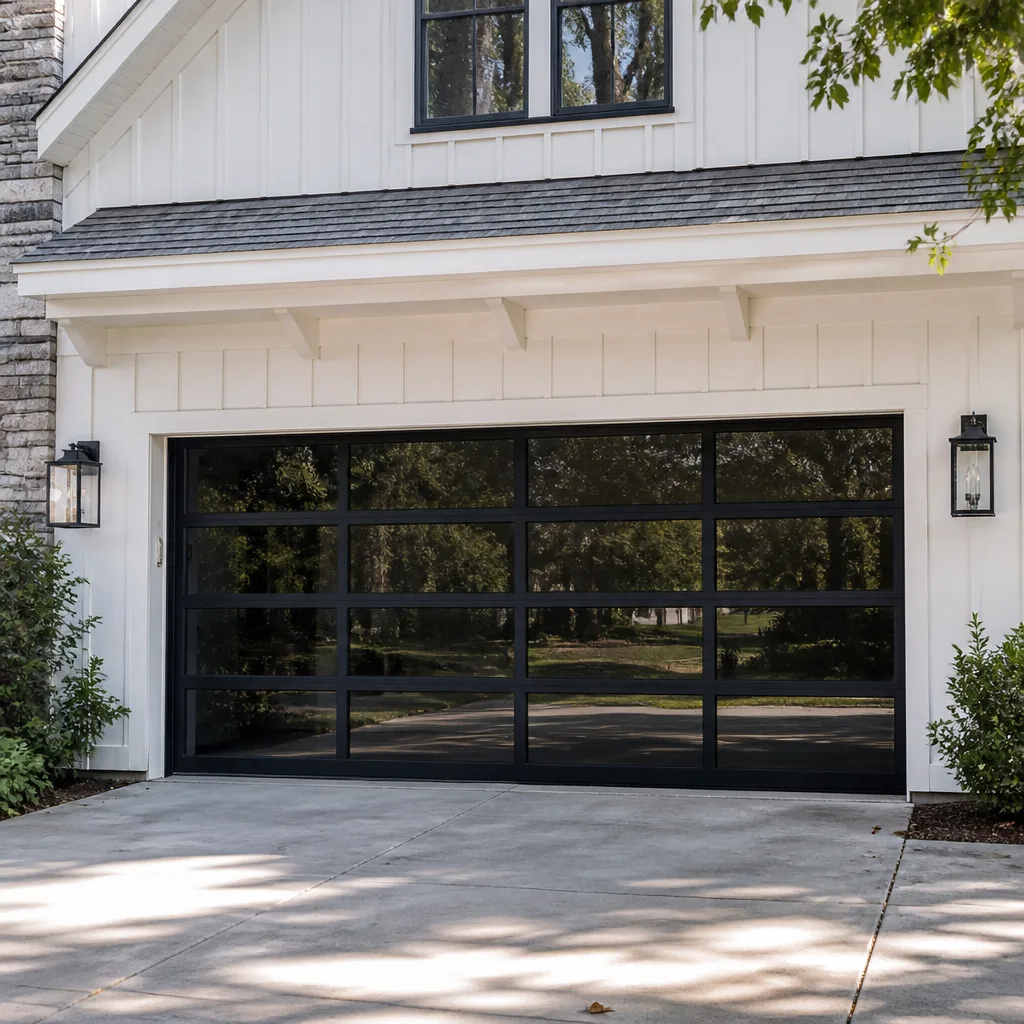 Full-view glass
 LiftMaster openers
 Chamberlain openers
Full 25-point door and opener safety check with every visit - springs, cables, rollers, tracks, and your LiftMaster or Chamberlain opener included
You get a price before we start. It does not change when the pro arrives.
Get your free estimateGarage Door Warning Signs: A Homestead Homeowner’s Reference Guide
A garage door that runs slow on a cold morning in Ohio has a lubrication problem. The same symptom in Homestead, where it rarely gets cold enough to stiffen grease, points somewhere else entirely: a torsion spring that’s losing tension and heading toward failure. One is a cheap fix. The other is a safety emergency. That gap between “normal for this climate” and “about to fail” is where most homeowners get lost, and it’s why we wrote this guide. Below you’ll find a symptom-by-symptom reference, urgency levels for each sign, the failures that are genuinely Homestead-specific, and the two warnings that mean stop using the door now. No guesswork, no panic.
Quick Answer
Most garage door warning signs in Homestead fall into three buckets: things you should watch (minor noise, slight vibration), things you should schedule a repair for (a door that reverses, an opener that hesitates, a remote that’s lost range), and things that mean stop using the door immediately (a snapped torsion spring, a frayed or hanging cable, or a door that slams down without resistance). In Homestead’s climate, humidity-related wood swelling and salt-air corrosion near Biscayne Bay produce symptoms that look alarming but are often manageable – and produce a few failure modes that are easy to miss until they’ve done real damage.
Styles & brands we work with
- Raised-panel steel
- Carriage house
- Modern flush
- Full-view glass
- LiftMaster openers
- Chamberlain openers
Table of Contents
- The Homestead Symptom Reference Table
- Humidity Swelling vs. Structural Panel Failure
- Salt-Air Corrosion: What’s Visible and What Isn’t
- Decoding Opener Behavior: Hesitation, Reversal, and Remote Range
- The Two Signs That Mean Stop Using the Door Now
- Why Springs Fail So Often in Homestead
- A Numbered Monthly Walkthrough for Homestead Homeowners
- Repair or Replace? A Decision Framework
The Homestead Symptom Reference Table
Symptoms lie. The same noise can mean three different things depending on when it happens, how often, and what the door is doing when you hear it. This table is the fastest way to sort a warning sign into an urgency level, so you know whether to pencil in a repair or pick up the phone. Bookmark this section. You’ll come back to it.
| Symptom | Likely cause in Homestead | Urgency |
|---|---|---|
| Door runs slow or sluggish from the first use of the day | Torsion spring losing tension (not cold-related here) | Schedule |
| Grinding or scraping on one side only | Bent track, worn roller, or a panel out of alignment | Schedule |
| Loud bang from the garage, door won’t lift | Snapped torsion spring | Stop using |
| Squealing that changes with speed | Roller bearings running dry | Monitor |
| Door reverses before touching the ground | Photo-eye misalignment or travel-limit drift | Schedule |
| Remote works only when you’re a few feet away | Antenna, battery, or logic-board issue in the opener | Monitor to Schedule |
| Cables look slack, frayed, or are hanging off a drum | Cable fatigue, often accelerated in humid air | Stop using |
| Visible rust blooms along the bottom panel | Humidity-driven surface corrosion (often cosmetic) | Monitor |
| Interior panel edges soft or bulging | Wood swelling from humidity, or panel failure | Inspect |
| Door sags at one corner when open | Weakened spring on one side, track misalignment | Schedule |
Here’s the working rule that table encodes: anything that involves the lift mechanism (springs, cables) is treated more seriously than anything that involves the frame or finish. That’s not because frame problems don’t matter – it’s because lift failures happen fast, and a door with a snapped spring is a 200- to 400-pound panel being held up by nothing. In our experience, the Homestead calls that escalate from “monitor” to “emergency” are almost always the spring and cable rows.
Humidity Swelling vs. Structural Panel Failure
South Florida humidity does something predictable to wood and wood-composite garage door panels: it makes them swell. The panels absorb moisture from the air over a season, the edges cup slightly, and the door can sit a millimeter or two taller than it did in spring. That’s normal behavior, and in most cases it corrects itself as the air dries out. It’s also the symptom homeowners confuse most often for structural failure.
The distinction that matters is movement versus deterioration. Swelling moves. Failure crumbles.
- Swelling looks like: a slight bow in the panel face, tight-fitting panels that rub a little at the seams, a faint line along the bottom edge, and paint that cracks at the joints. The panel is intact. Tap it – it sounds solid.
- Structural failure looks like: delamination where the outer skin separates from the core, soft spots that give when you press them with a thumb, visible rot or dark staining that doesn’t sand away, and a panel that flexes visibly when the door is operating.
If you’re not sure which one you’re looking at, test it with a screwdriver handle rather than the blade. A healthy panel gives a firm, consistent tap. A failing panel gives a dead, hollow thud in one area and a solid tap two inches away. That inconsistency is the tell.
Humidity-swollen panels that still sound solid and still track evenly are a paint-and-caulk project. Structurally failed panels need to be replaced – not because the door is about to fall, but because a soft panel won’t hold its shape through another wet season, and the sag pulls the door out of alignment. Clopay and Amarr both build panels for exactly this climate, which is one reason we lean on those brands when we’re quoting a panel replacement for a Homestead home with a humidity history.
Salt-Air Corrosion: What’s Visible and What Isn’t
Homes within about 10 miles of Biscayne Bay live with a specific kind of corrosion pressure that inland Homestead properties don’t see the same way. Salt in the air attacks metal surfaces faster than humidity alone, and it does it two ways: visibly, on the surfaces you can see, and invisibly, inside the cables and springs your door depends on.
Visible corrosion is the easy kind to spot. Look for:
- Orange or brown speckling on the bottom panel and the bottom roller brackets – the parts closest to the ground and closest to the most humidity
- White or chalky deposits on hinges and track brackets
- Paint bubbling at the panel seams rather than at the face
- Rust bleeding down the inside of the track from the top rollers
Surface corrosion on the bottom 12 inches of a steel door is common near the bay and usually cosmetic. It’s reason to clean and touch up, not to replace.
Internal corrosion is the sign that gets missed. Garage door cables are braided steel, and braided steel corrodes from the inside out when it’s exposed to salt humidity. You can look at a cable and see a perfectly healthy-looking exterior while the strands inside have already begun to fail. The same is true of torsion springs, which develop micro-pitting that reduces their working life well before they break.
What to actually check on a cable: run your eyes – not your hand – along its full length, looking for the cable to sit evenly wound on its drum, for any frayed strands sticking out at the ends, and for any sag. If any strand has broken, stop using the door.
A door within 10 miles of Biscayne Bay should get a professional inspection more often than an inland door, and should be checked for cable and spring pitting rather than just visible rust. That’s a different inspection than a visual walk-around, and it’s one of the reasons garage door repair in a coastal-adjacent Homestead neighborhood often starts with a cable and spring review before anything cosmetic.
Decoding Opener Behavior: Hesitation, Reversal, and Remote Range Loss
Your opener is a small computer, and like any computer it tells you what’s wrong if you know what to listen for. The trouble is that three different failure systems – logic, sensors, and mechanical – can produce similar symptoms. Here’s how to tell them apart.
Hesitation before the door moves
A second or two of delay before the motor engages is usually the opener’s logic board cycling through its safety check. On LiftMaster and Chamberlain units, this is expected behavior when the door hasn’t moved in several hours. What’s not expected is hesitation that gets longer over time, or hesitation that happens on every single open. That’s the logic board struggling, or a photo-eye that’s intermittently losing signal.
Reversal before the door touches the floor
This is the most common opener complaint we hear in Homestead, and it almost always has one of three causes:
- Photo-eye misalignment. The two sensors at the bottom of the track need to see each other. One knocked out of line by a broom or a bicycle is enough. Check that both LEDs are solid (not blinking).
- Travel-limit drift. The opener “learns” where the floor is, and over months that setting can shift. The door reverses because the opener thinks it’s hit an obstacle.
- Failing logic board. If the eyes are aligned and the limits have been re-set and the door still reverses, the board is the next suspect.
Genie openers tend to be fussier about photo-eye alignment than others in our experience. If you have a Genie and the door starts reversing intermittently, start with the eyes.
Remote range loss
A remote that used to work from the driveway and now only works from three feet away is not usually a dead battery. It’s usually one of these:
- Antenna placement. The opener’s antenna wire (a thin hanging wire on most models) may have been pushed up against metal, or tucked behind the motor housing.
- Interference. New LED bulbs – especially in the opener itself – can interfere with the radio signal. That’s a real and common issue on Chamberlain and LiftMaster units.
- Logic-board or receiver failure. If the antenna is clear and the battery is fresh and range is still poor, the receiver on the board is the last suspect.
Opener issues are usually a same-visit fix rather than a parts-order-and-wait job, which is why garage door opener repair is one of the most common calls we take in Homestead. A technician who’s worked on your brand before is a big part of why the visit goes quickly.
The Two Signs That Mean Stop Using the Door Now
Two warning signs override everything else on this page. If you see either, do not open or close the door – not once, not “just to check.” Call a technician. This isn’t caution theater; it’s the difference between a repair bill and a hospital visit.
Sign 1: A snapped torsion spring. You’ll usually hear it as a sharp bang from the garage, and afterward the door won’t lift. Sometimes you’ll see a visible gap in the spring above the door, or two halves sitting at odd angles. Torsion springs store enormous energy when they’re wound; a broken one has released it and the door has no counterbalance. The opener can’t safely lift a door it was never meant to lift alone. Leave it.
Sign 2: A cable off its drum, hanging slack, or visibly frayed. Cables do the second half of the lifting work alongside the springs, and they’re under tension too. A cable that’s come off the drum can whip; a frayed cable can fail suddenly under load. If you see anything other than a taut, evenly wound cable on its drum, stop.
We want to be clear about why: these are high-tension components. They are not DIY-repair territory, and no guide – including this one – should walk you through touching them. If you’re the sort of homeowner who fixes everything, that instinct should stop at the torsion bar. A trained technician has the winding bars, the safety habits, and the experience to do this work without risk to you or damage to your door. Our technicians have up to 9 years of experience, and every one of them treats these two signs as the same red-light signal.
If you’re seeing either of these right now, don’t wait for the garage door to fail on its own schedule. garage door spring repair is a job designed to be done safely and quickly by someone who’s done it many times.
Why Springs Fail So Often in Homestead
Torsion springs fail on a cycle count, not a calendar. Every open and close uses up one cycle of the spring’s designed life, and when the cycle count runs out, the spring breaks. That’s true everywhere. What’s different about Homestead is the environmental side: salts and humidity accelerate the microscopic pitting that weakens a spring’s surface, and heat cycles from the summer months stress the metal unevenly. Two springs of the same age and cycle count can have different remaining lives based on how close to Biscayne Bay the door sits.
What that means practically:
- Age alone is a weak signal. A six-year-old spring in a well-used door may be near failure; a twelve-year-old spring in a rarely-used door may have plenty left. Cycle count and condition both matter.
- Sluggishness is a stronger signal than age. A door that starts slow and gets slower over weeks is showing you a spring losing tension.
- Matched pairs matter. When one spring in a pair breaks, the other one has nearly the same cycle count and shouldn’t be far behind. Replacing them together costs more than replacing one but far less than two separate visits – and it means the door lifts evenly.
When a spring does break, the quote will be per spring. A pair is usually replaced together, and a pair costs roughly twice a single spring.
A Numbered Monthly Walkthrough for Homestead Homeowners
Five minutes a month catches almost everything on this list before it becomes urgent. Here’s the walkthrough we recommend to every Homestead homeowner:
- Listen before you open. Stand in the garage and open the door. You’re listening for grinding, squealing, or any new noise that wasn’t there last month.
- Watch the door the whole way. Look for sag, wobble, uneven travel, or a door that changes speed partway up.
- Check the eyes. Confirm both photo-eye LEDs at the bottom of the track are solid.
- Look at the lift mechanism. With the door closed, eyeball the springs (both should look the same, no visible gaps), and the cables (taut, evenly wound, no frayed strands). Do not touch them.
- Push test. With the door half-open and the opener disengaged by hand, the door should hold its own weight without drifting. If you push it gently, it should feel balanced.
- Inspect the bottom edge. Rust blooms, soft wood, bubbling paint. Note what you see but don’t act on surface rust alone.
- Test the remote from the end of the driveway. Range loss is easy to miss if you always park in the same spot.
Write down what you find each month. The pattern matters more than any single reading, and a history of “fine, fine, fine, slow” tells a technician something no single visit can.
Repair or Replace? A Decision Framework
Homeowners ask this more than any other question, and it has a real answer. It mostly comes down to the door’s overall condition versus the cost of the specific repair.
Lean toward repair if:
- The door is fundamentally sound – panels are solid, tracks are straight, and only one system (springs, opener, or a roller) has failed
- The problem is isolated – you’re replacing a spring or a set of rollers, not multiple systems at once
- The panels are structurally intact but cosmetically worn
Lean toward replacement if:
- Two or more major systems have failed or are near failure
- Panels have structural failure (delamination, soft spots) rather than surface wear
- The door has become a repeat problem – multiple service calls in a short window
- You want to change materials or style anyway, and you’re replacing it for that reason rather than emergency
A full installation is a measured, ordered, scheduled job – the door and hardware have to be sized and ordered before anyone comes out. That’s a different rhythm than a repair, and it’s worth knowing that going in. If you’re weighing a full new-door installation against a repair, garage door repair can confirm whether the existing door has enough life left to justify the smaller job, and the free estimate will spell out exactly which path makes sense.
Common Mistakes to Avoid
- Assuming a slow door needs to be oiled. In a climate that rarely gets cold, sluggishness is much more often a spring losing tension than a lubrication problem. Greasing a failing spring doesn’t fix it, and it delays the call that would.
- Pulling the emergency release to “test” whether the door works. Pulling the release on a door with a broken spring can send the door crashing down. It’s meant for when the opener has failed, not for diagnosis.
- Treating surface rust as a sign of failure. Rust on the bottom panel near Biscayne Bay is common and usually cosmetic. Missing internal cable corrosion is the actual danger – that’s the corrosion you can’t see from the garage floor.
- Replacing one spring when the pair should be replaced together. The other spring is nearly as worn, and you’ll be paying for a second visit sooner than you think.
- Confusing humidity-swollen panels with rot. Swollen panels are a paint-and-caulk job if they still tap solid. Soft panels are a replacement. The tap test tells you which one you have.
- Blaming the opener for a mechanical problem. An opener that strains is often straining because the door has gotten heavy, not because the motor is failing. Replacing the opener won’t fix the underlying issue.
- Skipping the brand check. Not every technician works on every brand. If your door is a Raynor or a Wayne Dalton and the technician has only ever worked on LiftMaster, that’s a conversation worth having before they arrive, not after.
See the difference
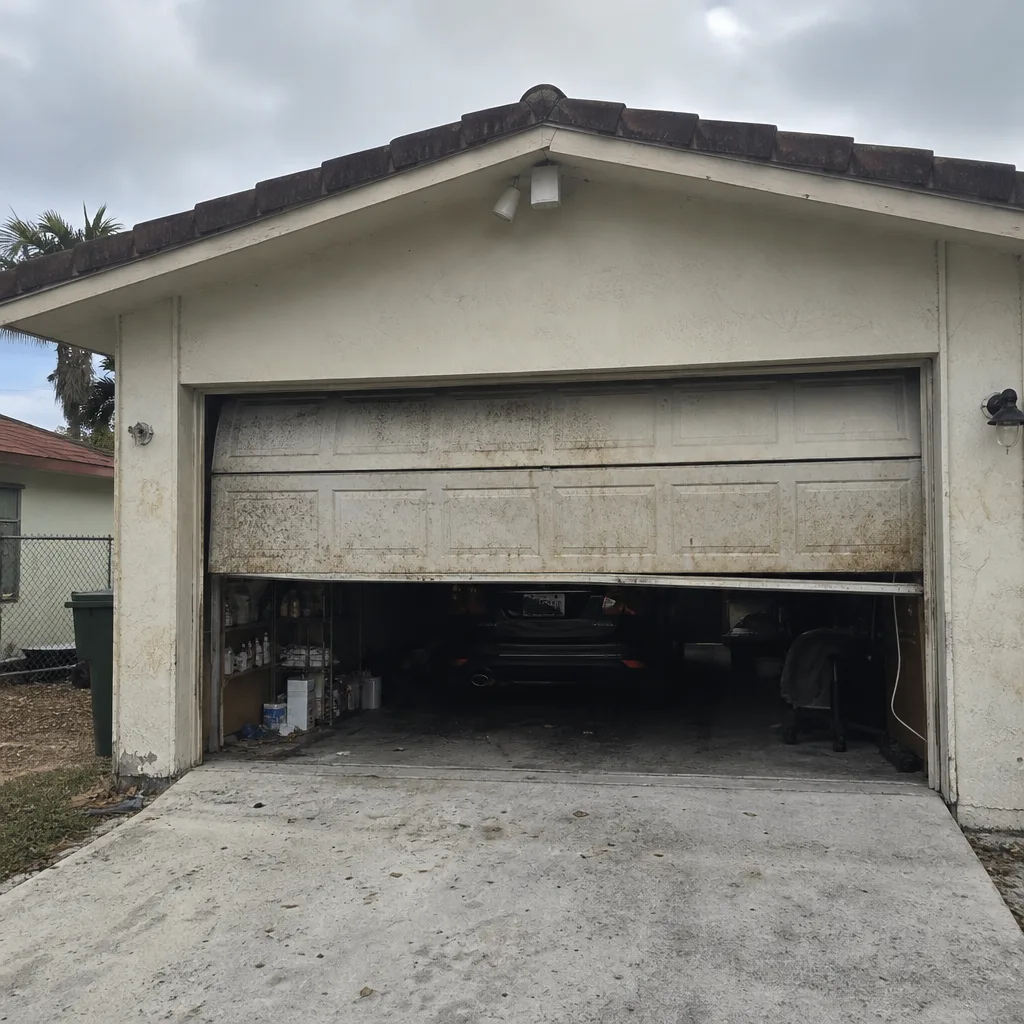 Before
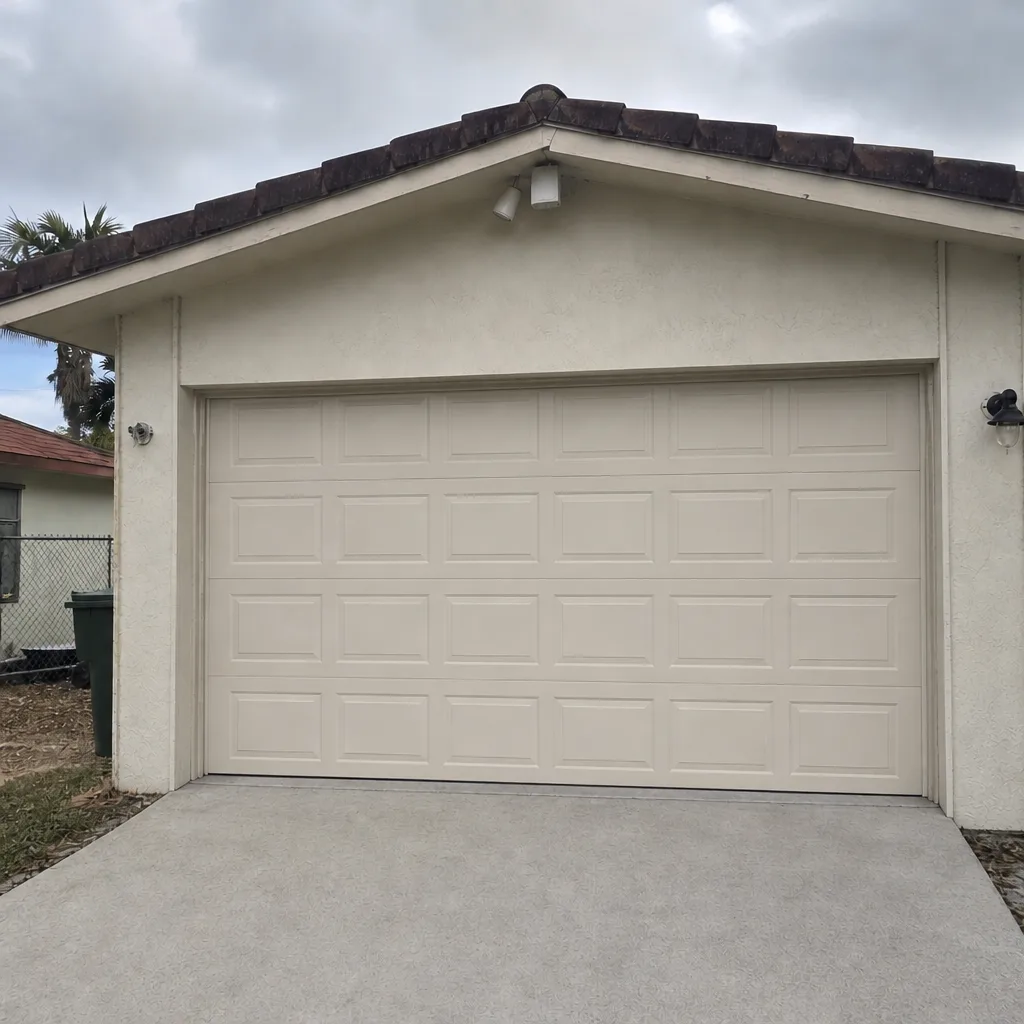 After
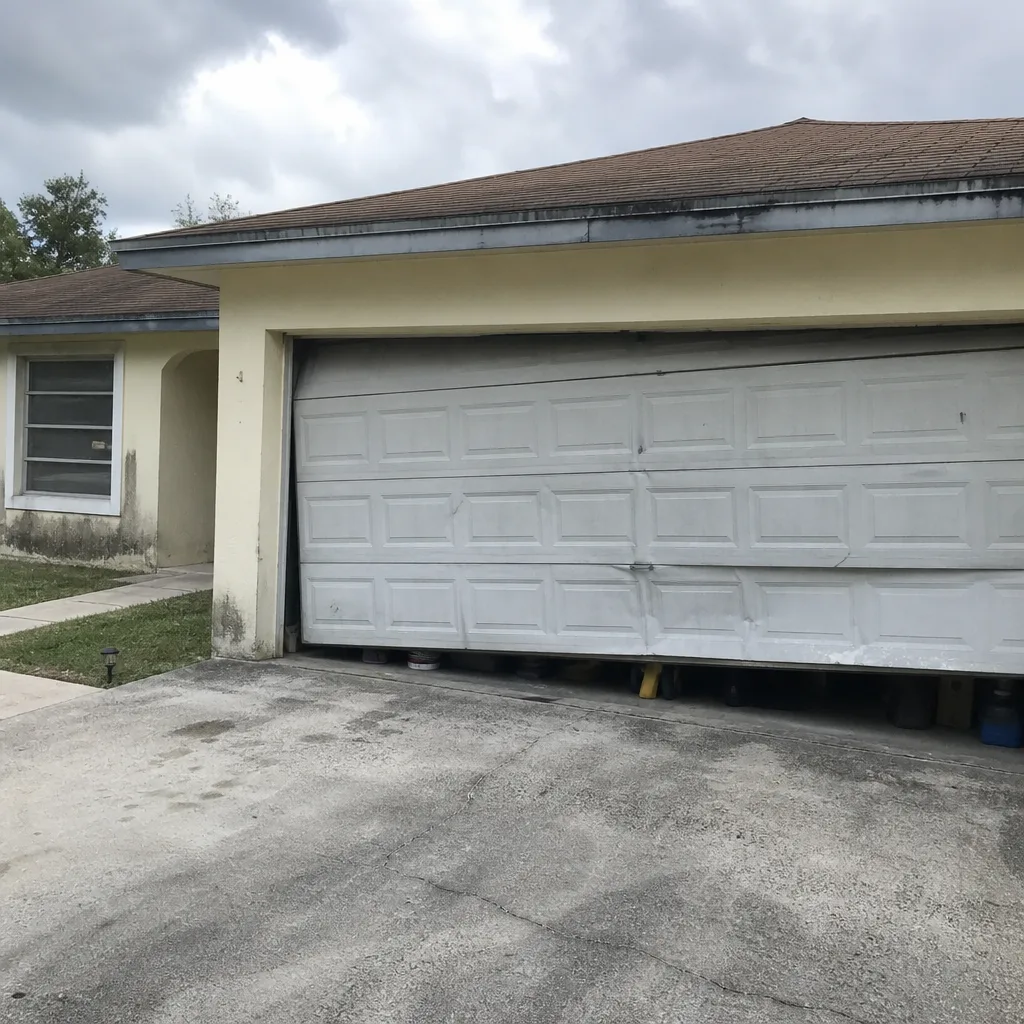 Before
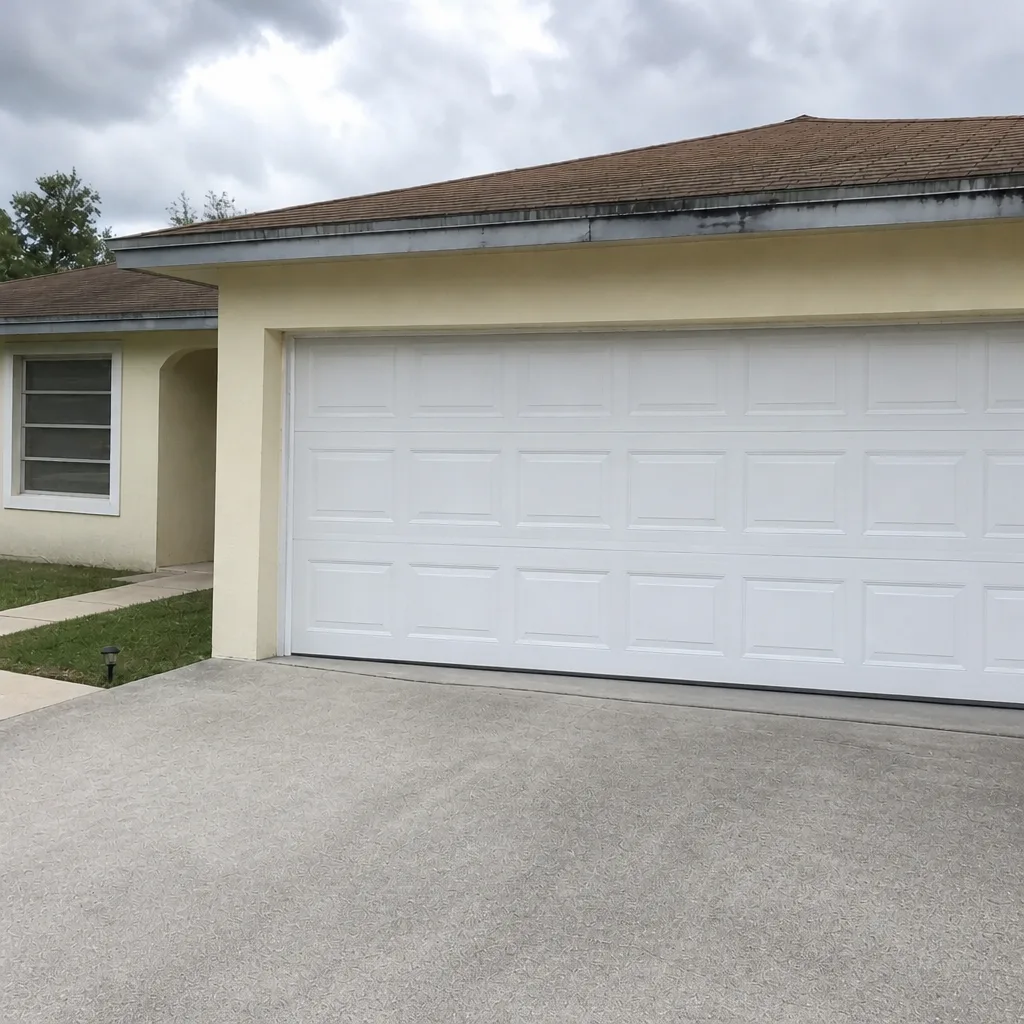 After
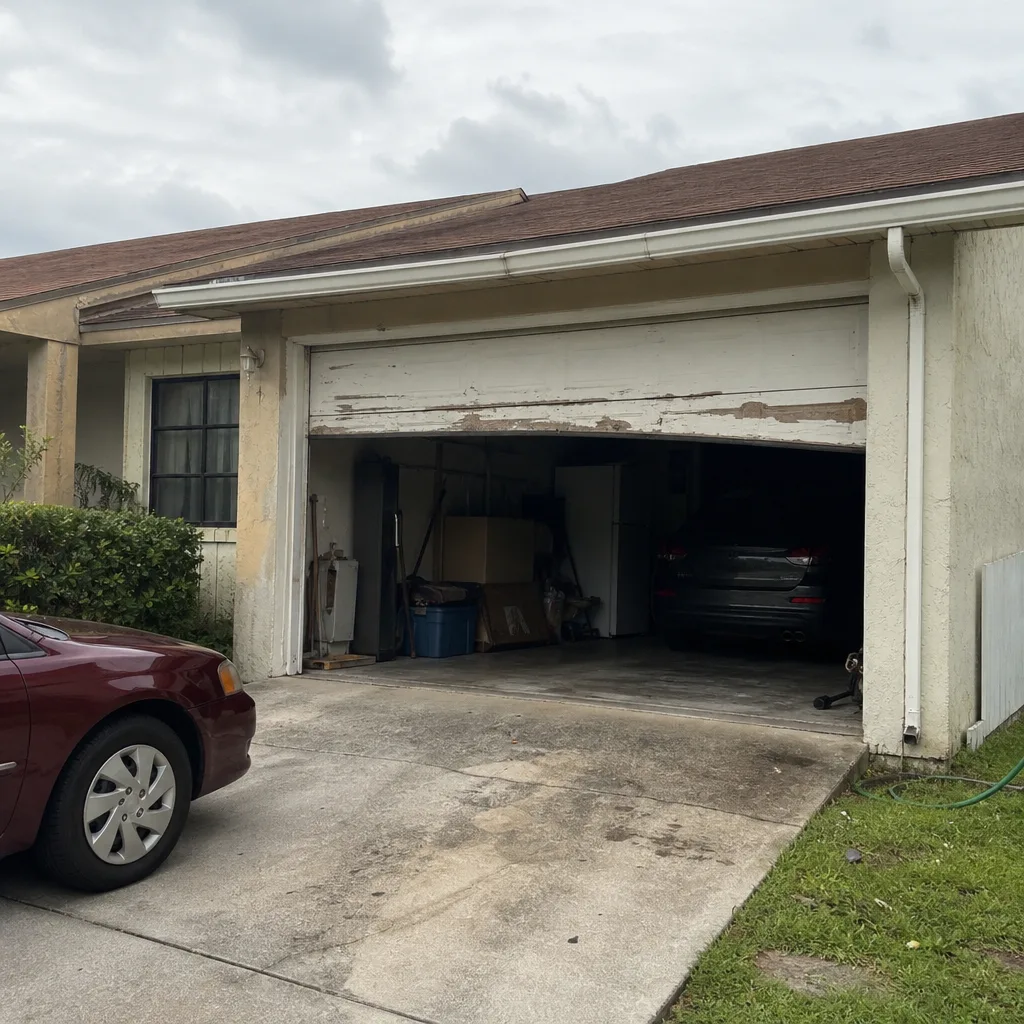 Before
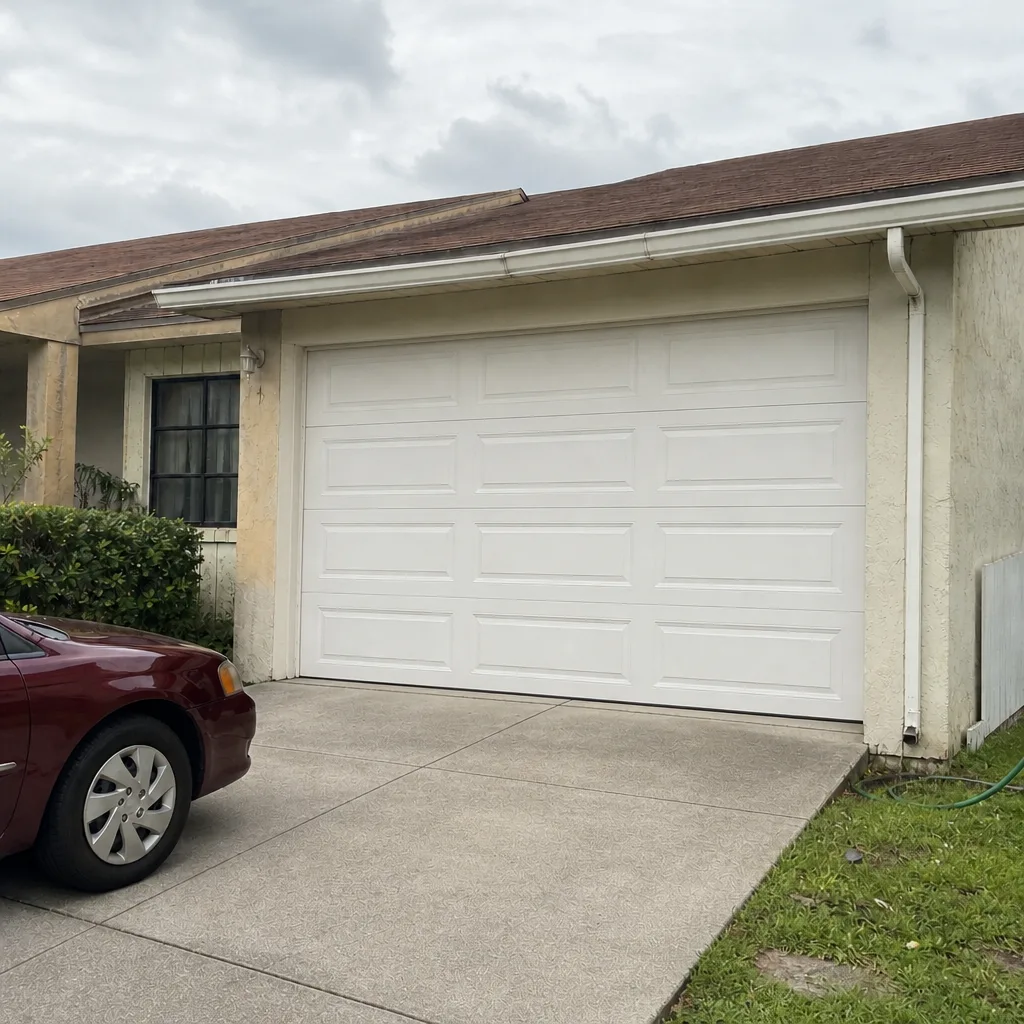 After
When to Call a Professional
Call a technician if any of the following is true: you’ve seen either of the two stop-using signs above; your door reverses, hesitates, or sags and the simplest fixes (eye alignment, new remote battery) haven’t cured it; you’ve spotted slack or frayed cable; a panel has gone soft; or you’re simply not sure what you’re looking at and would rather have someone check. There’s no penalty for calling too early. The penalty is in calling too late – and in this climate, the difference between “monitor” and “emergency” can be weeks, not months. Homestead Garage Door Repair Pros offers free estimates in Homestead – call (844) 497-0861. We answer 24/7. Fast dispatch from 7am to 7pm, Sunday through Friday. The written estimate you get sets the final price, and nothing gets done until you’ve agreed to it.
Frequently Asked Questions
The most common warning signs in Homestead are a slow or sluggish door (usually a spring losing tension), a door that reverses before touching the floor (usually photo-eye misalignment or travel limits), and grinding or scraping on one side (usually a bent track or worn roller). Less common but more serious are a visible gap in a spring or a cable off its drum – both are stop-using signs. If any of these sound familiar, call (844) 497-0861 for an exact quote – estimates are free.
Yes. In a climate like Homestead’s where it rarely gets cold, a door that runs slow is almost always a torsion spring losing tension rather than a cold-weather lubrication issue. The sluggishness comes from the spring doing less of the lifting work, leaving the opener to make up the difference. Don’t wait for the spring to break – have it checked. Call (844) 497-0861.
Pricing depends on the spring type and whether one or both springs are being replaced, and the written estimate you receive is the price you agree to before any work starts. Since matched pairs are usually replaced together and a pair costs about twice a single spring, the estimate will break down exactly what’s being replaced. Call (844) 497-0861 for an exact quote – estimates are free.
No. The price is set by the written estimate you receive and agree to before any work begins. If we find something during the appointment that changes the scope – say the cable needs replacing alongside the spring – we’ll tell you and re-quote before doing the additional work, not after. Call (844) 497-0861 for a free estimate.
Yes. The local professional we connect you with is licensed and insured as their state requires, and our technicians have up to 9 years of experience across the eight major garage door and opener brands we work with, including LiftMaster, Chamberlain, Genie, and Clopay. That brand familiarity means whoever comes out is prepared for the system already in your home. Call (844) 497-0861.
Same-day service is available for repair and emergency work, and if you call outside dispatch hours we’ll book you into the next opening. We answer 24/7 on (844) 497-0861, and our fast dispatch runs from 7am to 7pm, Sunday through Friday. We’re closed on Saturday. Installations are measured, ordered, and scheduled, so those are booked rather than same-day.
The Bottom Line
The warning signs on your garage door split into three urgency levels, and knowing which one you’re looking at is the whole game. Monitor the small stuff – surface rust, a squeal, a slow remote. Schedule the mid-range issues – a reversing door, a sagging corner, a door that’s gotten heavier. Stop immediately for a snapped spring or a compromised cable, because those are the only two that put anyone at risk. In Homestead’s climate, the climate-specific signals – spring fatigue in the absence of cold, humidity swelling versus panel failure, and salt-air corrosion hidden inside cables – are the ones most often missed. If you’re not sure where your door falls, call us. We’d rather help you sort “monitor” from “emergency” over the phone than have you guess. Call (844) 497-0861 for a free estimate. We answer 24/7, and fast dispatch runs from 7am to 7pm, Sunday through Friday. You can also read more about our garage door opener repair and garage door repair services to see how we handle each type of call – or start with Homestead Garage Door Repair Pros and we’ll point you in the right direction.
Written by the team at Homestead Garage Door Repair Pros.